US Inflation Spike: Key Factors Driving Recent Price Increases
Anúncios
The recent 3-month spike in US inflation rates stems from a confluence of strong consumer demand, persistent global supply chain disruptions, and the impact of geopolitical events on energy and commodity prices.
Anúncios
Have you felt the pinch at the grocery store or gas pump lately? The recent US inflation spike over the past three months has become a significant concern for households and policymakers alike. This article delves into the core factors contributing to these escalating prices, helping you understand the economic landscape.
Anúncios
Decoding the Recent Inflationary Surge: A Macroeconomic View
The United States economy has experienced a notable acceleration in inflation over the last quarter, a trend that demands careful analysis beyond simple headlines. This surge isn’t monolithic; it’s a complex phenomenon influenced by various interconnected economic forces, both domestic and global. Understanding these underlying mechanisms is crucial for discerning the path forward.
Economists are closely monitoring several key indicators to grasp the full scope of this inflationary period. While some price increases might be temporary, others appear to be more deeply rooted, reflecting structural changes or sustained pressures within the economy. This section aims to unpack the macroeconomic backdrop against which these price changes are occurring, setting the stage for a deeper dive into specific drivers.
The Role of Post-Pandemic Economic Recovery
The swift rebound from the pandemic-induced slowdown played a significant role in igniting inflationary pressures. As economies reopened, consumer demand surged, often outpacing the ability of producers to supply goods and services. This imbalance naturally led to higher prices.
- Pent-up Demand: Consumers, flush with savings and government stimulus, were eager to spend on travel, dining, and durable goods.
- Labor Market Tightness: A robust job market, characterized by low unemployment and rising wages, fueled consumer spending power.
- Sectoral Shifts: A reallocation of spending from services to goods during the pandemic created supply bottlenecks that persisted post-reopening.
In conclusion, the recent inflationary surge is intricately linked to the dynamics of a recovering economy. The rapid return of consumer spending, coupled with a tight labor market and shifts in demand patterns, created an environment ripe for price increases. These macroeconomic conditions provide the foundational context for understanding the more specific drivers of inflation.
Supply Chain Disruptions: A Persistent Headwind for Prices
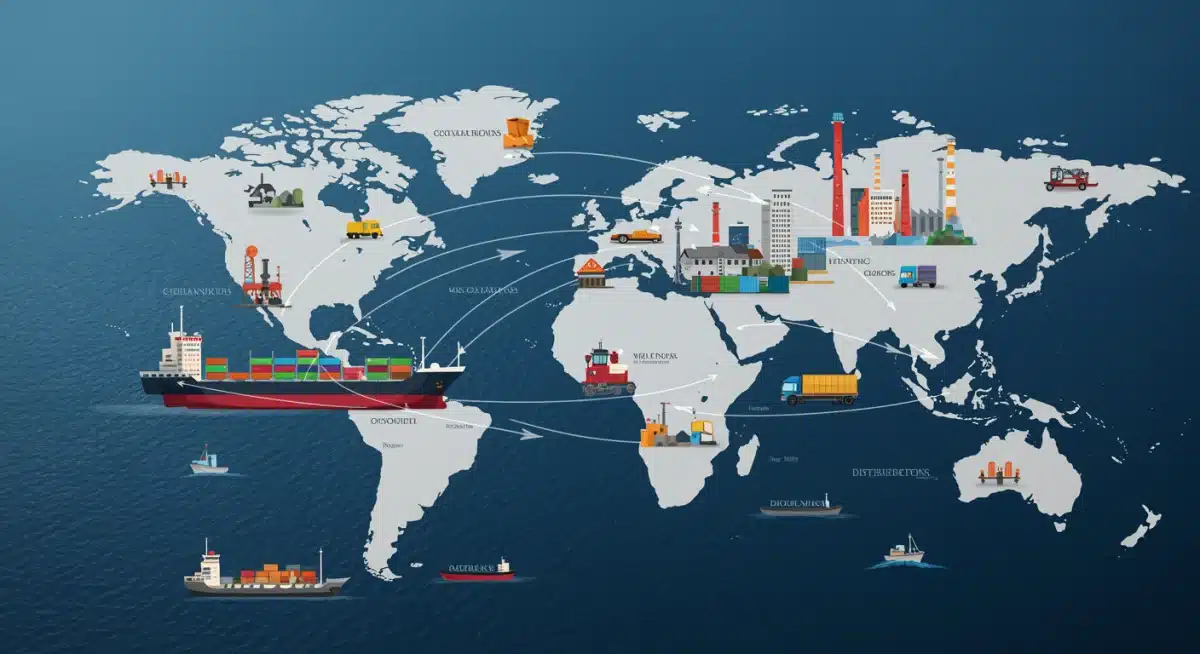
One of the most frequently cited culprits behind the current price increases is the ongoing disruption in global supply chains. These issues, initially triggered by the pandemic, have proven remarkably resilient and continue to exert significant upward pressure on costs for businesses, which are then passed on to consumers. From manufacturing delays to shipping bottlenecks, the journey of goods from producer to consumer has become fraught with challenges.
The complexity of modern supply chains means that a disruption in one part of the world can have ripple effects across industries and continents. Businesses are struggling to source raw materials, transport finished products, and manage inventory efficiently, all of which contribute to higher operational costs. This section will explore the various facets of these supply chain challenges and their direct impact on inflation.
Global Logistics Gridlock
The efficiency of global shipping and logistics has been severely hampered, leading to increased costs and delays. Ports worldwide have faced unprecedented congestion, and the availability of shipping containers and vessels remains a significant issue.
- Port Congestion: Docks are overwhelmed with incoming cargo, leading to long waiting times for ships to unload.
- Container Shortages: A misalignment of empty containers in the right locations has driven up shipping costs dramatically.
- Labor Shortages: Truckers, port workers, and warehouse staff are in short supply, exacerbating delays in inland transportation.
Furthermore, geopolitical events and unexpected weather phenomena have added layers of complexity to an already fragile system. For instance, temporary factory shutdowns due to new COVID-19 outbreaks in manufacturing hubs or extreme weather events impacting transportation routes can instantly create new bottlenecks. These unforeseen events make it difficult for businesses to predict and plan, leading to reactive price adjustments rather than stable pricing strategies.
In summary, persistent supply chain disruptions are a major contributor to the current US inflation spike. The gridlock in global logistics, coupled with labor shortages and unpredictable external factors, translates directly into higher costs for businesses and eventually, for the end consumer. Addressing these structural issues is key to alleviating some of the inflationary pressures.
The Impact of Robust Consumer Demand and Spending Patterns
While supply-side issues garner significant attention, the demand side of the economic equation has been equally powerful in driving the recent inflation spike. American consumers, buoyed by various factors, have demonstrated a remarkable resilience in spending, often outstripping the economy’s short-term capacity to produce. This strong demand acts as a powerful propellant for price increases, especially in sectors where supply remains constrained.
Understanding consumer behavior in this post-pandemic era is critical. The composition of spending has also shifted, with certain categories experiencing disproportionately high demand. This section will delve into how robust consumer demand, fueled by accumulated savings and a strong labor market, has contributed to the upward trajectory of prices, reinforcing the US inflation spike.
Consumer Resilience and Spending Power
Several factors have contributed to the sustained high levels of consumer spending, providing a strong foundation for demand-pull inflation. The combination of accumulated savings and a healthy job market has empowered consumers to continue purchasing despite rising prices.
- Excess Savings: Many households built up significant savings during the pandemic due to reduced spending opportunities and government stimulus checks.
- Strong Labor Market: Low unemployment rates and wage growth have provided a steady income stream, supporting continued consumption.
- Wealth Effect: Rising asset prices, particularly in housing and stock markets, have made consumers feel wealthier and more willing to spend.
Moreover, the shift in consumer preferences towards certain goods and services has created targeted demand pressures. For example, the continued strong demand for vehicles, both new and used, alongside home improvement materials, has kept prices elevated in these specific markets. This concentrated demand, interacting with existing supply bottlenecks, creates a perfect storm for price inflation in those sectors.
Ultimately, the robust and resilient nature of consumer demand is a significant factor in the ongoing US inflation spike. Fueled by savings, a strong job market, and a general willingness to spend, consumers are actively bidding up prices for goods and services where supply cannot keep pace. This demand-side pressure complements the supply-side constraints, creating a comprehensive picture of current inflationary trends.
Energy Prices and Geopolitical Tensions: Global Catalysts
Beyond domestic economic dynamics and supply chain woes, global energy prices and geopolitical tensions have emerged as potent catalysts for the recent inflationary surge. The interconnectedness of global markets means that events occurring thousands of miles away can have a direct and immediate impact on the cost of living in the United States. Energy, in particular, acts as a foundational input for nearly every sector of the economy, making its price fluctuations highly influential.
The volatility in global energy markets, often exacerbated by geopolitical conflicts, translates quickly into higher operational costs for businesses and increased expenses for consumers. This section will explore how these external factors have played a critical role in fueling the US inflation spike, demonstrating the global nature of contemporary economic challenges.
The Volatile World of Oil and Gas
Crude oil and natural gas prices have seen significant swings, driven by a combination of recovering demand and supply-side constraints, often intensified by geopolitical events. These price hikes ripple through the economy, affecting transportation and production costs.
- OPEC+ Decisions: Production quotas set by major oil-producing nations significantly influence global supply and pricing.
- Geopolitical Conflicts: Conflicts in major energy-producing regions can disrupt supply routes and create uncertainty, leading to speculative price increases.
- Increased Demand: The global economic recovery has boosted demand for energy, pushing prices higher as supply struggles to keep up.
Furthermore, the broader commodity markets, including agricultural products and industrial metals, have also experienced significant price increases. This is partly due to the rising cost of energy required for their production and transportation, but also due to specific supply challenges like adverse weather conditions affecting harvests or export restrictions imposed by certain countries. The combined effect of these commodity price hikes contributes substantially to the overall inflationary environment.
In conclusion, global energy prices and geopolitical tensions are critical external factors that have significantly contributed to the recent US inflation spike. The volatility in oil and gas markets, coupled with broader commodity price increases, directly impacts business costs and consumer budgets, highlighting the vulnerability of the US economy to international events.
Wage Growth and Labor Market Dynamics
The labor market in the United States has undergone significant transformation in recent years, characterized by a tight supply of workers and notable wage growth across various sectors. While rising wages are generally positive for workers, they can also contribute to inflationary pressures, particularly if productivity gains do not match the increase in labor costs. Businesses facing higher wage bills often pass these increased costs onto consumers through higher prices for goods and services.
This dynamic creates a complex feedback loop, often referred to as a wage-price spiral, where rising wages lead to higher prices, which in turn prompt demands for even higher wages. Understanding how wage growth and broader labor market dynamics are influencing the current US inflation spike is crucial for a complete picture of the economic environment.
The Tight Labor Market and Wage Pressures
The current labor market is characterized by a high number of job openings and a relatively low unemployment rate, giving workers more leverage to demand higher wages. This tightness is observed across many industries, from entry-level positions to highly skilled roles.
- Labor Shortages: Many industries report difficulty finding enough qualified workers to fill open positions.
- Increased Bargaining Power: Workers have more leverage to negotiate for higher pay and better benefits.
- “Great Resignation” Effect: A significant number of workers have voluntarily left their jobs, contributing to labor supply constraints.
Moreover, the cost of benefits, such as health insurance and retirement contributions, has also been on an upward trend, adding to the overall compensation burden for employers. These rising non-wage labor costs also get factored into pricing decisions. The combination of direct wage increases and rising benefit costs means that the total cost of labor has been a significant input into the inflation equation.
In essence, the robust wage growth and tight labor market conditions are playing a substantial role in the US inflation spike. As businesses face higher costs for attracting and retaining talent, these expenses are often reflected in the prices consumers pay for goods and services. Monitoring these labor market dynamics is essential for forecasting future inflationary trends.
Monetary Policy and Fiscal Stimulus: Fueling the Economy
The actions of monetary and fiscal authorities have also played a significant, albeit debated, role in shaping the current inflationary landscape. During the pandemic, both the Federal Reserve and the U.S. government implemented unprecedented measures to support the economy, injecting substantial liquidity and direct financial aid. While these interventions were crucial for preventing a deeper economic collapse, their scale and duration have raised questions about their contribution to the recent US inflation spike.
Monetary policy, primarily controlled by the Federal Reserve, influences the supply of money and credit, while fiscal policy, managed by the government, involves spending and taxation. Both have direct and indirect effects on aggregate demand and, consequently, on price levels. This section explores how these policy decisions have interacted with other factors to create the current inflationary environment.
The Role of Quantitative Easing and Low Interest Rates
The Federal Reserve’s long-standing policy of low-interest rates and quantitative easing (large-scale asset purchases) aimed to stimulate economic activity but also increased the money supply, potentially contributing to inflation.
- Low Borrowing Costs: Artificially low interest rates encouraged borrowing and spending by businesses and consumers.
- Increased Money Supply: Quantitative easing injected vast amounts of money into the financial system, boosting liquidity.
- Asset Price Inflation: Loose monetary policy also contributed to rising asset prices, creating a wealth effect that fueled consumption.
Concurrently, extensive fiscal stimulus packages, including direct payments to households, enhanced unemployment benefits, and business support programs, injected trillions of dollars into the economy. This direct infusion of funds significantly boosted consumer purchasing power at a time when supply chains were already under strain. The combination of strong consumer demand (fueled by fiscal policy) and ample liquidity (from monetary policy) created fertile ground for prices to rise.
In summary, the substantial monetary accommodation and fiscal stimulus measures implemented during and after the pandemic have contributed to the recent US inflation spike. By boosting aggregate demand and increasing the money supply, these policies, while necessary for economic recovery, have also added to the upward pressure on prices. The ongoing debate revolves around the optimal timing and pace of withdrawing these accommodative policies to tame inflation without stifling growth.
Future Outlook and Policy Responses to Inflation
Predicting the future trajectory of inflation is a complex task, as it involves a delicate interplay of numerous economic variables and potential unforeseen events. However, understanding the likely future outlook and the policy responses being considered by authorities is crucial for businesses and consumers alike. The Federal Reserve and the U.S. government are keenly aware of the challenges posed by the persistent US inflation spike and are formulating strategies to bring price stability back to the economy.
The path forward is not without its challenges, as policymakers must navigate the fine line between curbing inflation and avoiding an economic downturn. Different scenarios are being considered, from a gradual deceleration of price increases to more persistent inflationary pressures. This section will explore the potential future outlook for inflation and the range of policy tools being deployed or contemplated.
The Federal Reserve’s Stance and Tools
The Federal Reserve has clearly signaled its commitment to bringing inflation under control, primarily through adjustments to monetary policy. The primary tool for this is raising interest rates, which aims to cool down demand by making borrowing more expensive.
- Interest Rate Hikes: The Fed has been raising the federal funds rate, making loans more costly for consumers and businesses.
- Quantitative Tightening: Reducing the Fed’s balance sheet by allowing bonds to mature without reinvesting the proceeds, thereby reducing the money supply.
- Forward Guidance: Communicating future policy intentions to manage market expectations and influence economic behavior.
Beyond monetary policy, the government’s fiscal policy also plays a role. While direct stimulus measures are largely winding down, future fiscal decisions regarding government spending and taxation could impact inflationary pressures. For example, investments in supply-side improvements, such as infrastructure projects or initiatives to boost labor force participation, could help alleviate some of the structural causes of inflation in the long run.
Ultimately, the future outlook for the US inflation spike hinges on the effectiveness of these policy responses and the evolution of underlying economic conditions. While a swift return to pre-pandemic inflation levels may not be immediate, coordinated efforts from monetary and fiscal authorities, alongside a normalization of global supply chains, are expected to gradually temper price increases over time. Vigilance and adaptability will be key for navigating this evolving economic landscape.
| Key Factor | Brief Description |
|---|---|
| Supply Chain Disruptions | Ongoing bottlenecks in global logistics, port congestion, and labor shortages drive up production and transportation costs. |
| Robust Consumer Demand | Strong spending, fueled by savings and a healthy job market, outstrips supply, pushing prices higher. |
| Energy Prices & Geopolitics | Volatile oil and gas prices, often exacerbated by global conflicts, increase costs across all economic sectors. |
| Wage Growth & Labor Markets | Tight labor markets and rising wages increase business costs, often passed on to consumers as higher prices. |
Frequently Asked Questions About US Inflation
The recent inflation spike is primarily driven by a combination of strong consumer demand post-pandemic, persistent global supply chain disruptions, elevated energy prices due to geopolitical events, and a tight labor market leading to wage growth. These factors collectively push up prices across various sectors.
Supply chain issues, including port congestion, container shortages, and labor scarcity, lead to increased costs for businesses in sourcing raw materials and transporting finished goods. These higher operational expenses are then typically passed on to consumers in the form of elevated retail prices.
Yes, robust consumer spending is a significant factor. Fueled by accumulated savings from the pandemic and a strong job market, demand for goods and services has often outpaced available supply. This imbalance, known as demand-pull inflation, directly contributes to rising prices.
Energy prices are crucial because they affect nearly every economic sector. Increases in crude oil and natural gas prices, often due to geopolitical tensions or supply constraints, raise transportation and production costs for businesses, which then feed into the prices of almost all goods and services.
The Federal Reserve is primarily combating inflation by raising interest rates, making borrowing more expensive to cool down demand. They are also implementing quantitative tightening, which involves reducing their balance sheet to decrease the money supply in the economy.
Conclusion
The recent US inflation spike over the past three months is a multifaceted economic challenge driven by a complex interplay of post-pandemic recovery dynamics, persistent global supply chain disruptions, robust consumer demand, volatile energy prices influenced by geopolitical events, and a tight labor market leading to wage growth. Understanding these interconnected factors is essential for grasping the current economic environment. While the path to price stability may be gradual, the Federal Reserve and government are deploying various monetary and fiscal tools to mitigate these pressures, aiming to restore balance to the economy without stifling growth. Consumers and businesses must remain adaptable as the economic landscape continues to evolve.