2026 Medicare Part D Redesign: Lower Your Prescription Costs by 15%

Anúncios
Understanding the 2026 Medicare Part D Redesign: Practical Steps to Lower Prescription Costs by 15%
The landscape of prescription drug coverage for Medicare beneficiaries is on the cusp of a significant transformation. The year 2026 marks a pivotal moment for Medicare Part D, bringing with it a comprehensive redesign mandated by the Inflation Reduction Act (IRA) of 2022. For millions of Americans relying on Medicare for their medication needs, these changes aren’t just technical adjustments; they represent a fundamental shift that could lead to substantial savings. Our aim today is to demystify the upcoming Medicare Part D 2026 redesign and, more importantly, equip you with practical, actionable strategies to potentially lower your annual prescription costs by a remarkable 15% or more.
Anúncios
Prescription drug costs have long been a significant financial burden for many seniors and individuals with disabilities. The complexity of Medicare Part D plans, coupled with rising drug prices, often leaves beneficiaries feeling overwhelmed and uncertain about how to manage their expenses effectively. The good news is that the 2026 redesign is largely designed to address these very concerns, introducing features aimed at increasing affordability and predictability.
This comprehensive guide will delve deep into the core components of the Medicare Part D 2026 changes, explaining what they mean for you. We’ll explore the new out-of-pocket spending cap, the elimination of the coverage gap (or ‘donut hole’), adjusted catastrophic coverage, and the implications for premium costs. Beyond just understanding the changes, we will provide a roadmap of practical steps you can take starting now to prepare for these shifts and maximize your savings. From proactive plan comparisons to leveraging manufacturer assistance programs, we’ll cover a range of strategies to help you navigate the new system with confidence and achieve tangible reductions in your prescription expenditures.
Navigating healthcare can be challenging, but being informed is your most powerful tool. By the end of this article, you will have a clear understanding of the Medicare Part D 2026 redesign and a personalized action plan to ensure you’re not just ready for the changes, but positioned to thrive under them, saving money and gaining peace of mind.
Anúncios
The Genesis of Change: Why the 2026 Medicare Part D Redesign?
The journey towards the Medicare Part D 2026 redesign began with a growing recognition of the financial strain prescription drug costs placed on American families and the Medicare program itself. For years, beneficiaries faced unpredictable costs, especially those with high drug expenses who would often fall into the dreaded ‘donut hole’ and then catastrophic coverage, where out-of-pocket spending could still be substantial.
The Inflation Reduction Act (IRA) of 2022 was a landmark piece of legislation that introduced several significant provisions aimed at lowering healthcare costs, particularly for prescription drugs. While some changes, like the $35 cap on insulin costs and free vaccines under Part D, have already taken effect, the most transformative structural changes to Part D are slated for 2025 and, more comprehensively, 2026. These reforms are not merely incremental; they represent a fundamental restructuring of how prescription drug costs are shared between beneficiaries, plans, drug manufacturers, and the federal government.
Key Drivers Behind the Redesign:
- High Out-of-Pocket Spending: Many beneficiaries, particularly those with chronic conditions requiring expensive medications, faced unlimited out-of-pocket costs once they entered the catastrophic phase. This led to significant financial hardship for a vulnerable population.
- The ‘Donut Hole’ Burden: The coverage gap, or ‘donut hole,’ required beneficiaries to pay a higher percentage of their drug costs after their initial coverage limit was reached, often catching people by surprise and leading to medication non-adherence.
- Lack of Predictability: The complex structure of Part D meant that beneficiaries often struggled to predict their annual drug expenses, making financial planning difficult.
- Rising Drug Prices: The overall increase in prescription drug prices contributed to the urgency of reform, pushing for measures to bring down costs for consumers.
The overarching goal of the Medicare Part D 2026 redesign is to make prescription drugs more affordable and predictable for beneficiaries, providing greater financial security and improving access to essential medications. By understanding these foundational motivations, you can better appreciate the impact of the specific changes we will discuss next.
Core Changes in the 2026 Medicare Part D Redesign: What You Need to Know
The Medicare Part D 2026 redesign introduces several critical structural changes that will directly affect your out-of-pocket costs. These are the pillars of the reform, designed to cap spending and streamline the benefit structure.
1. The $2,000 Out-of-Pocket Spending Cap (Effective 2025, but fully realized in 2026):
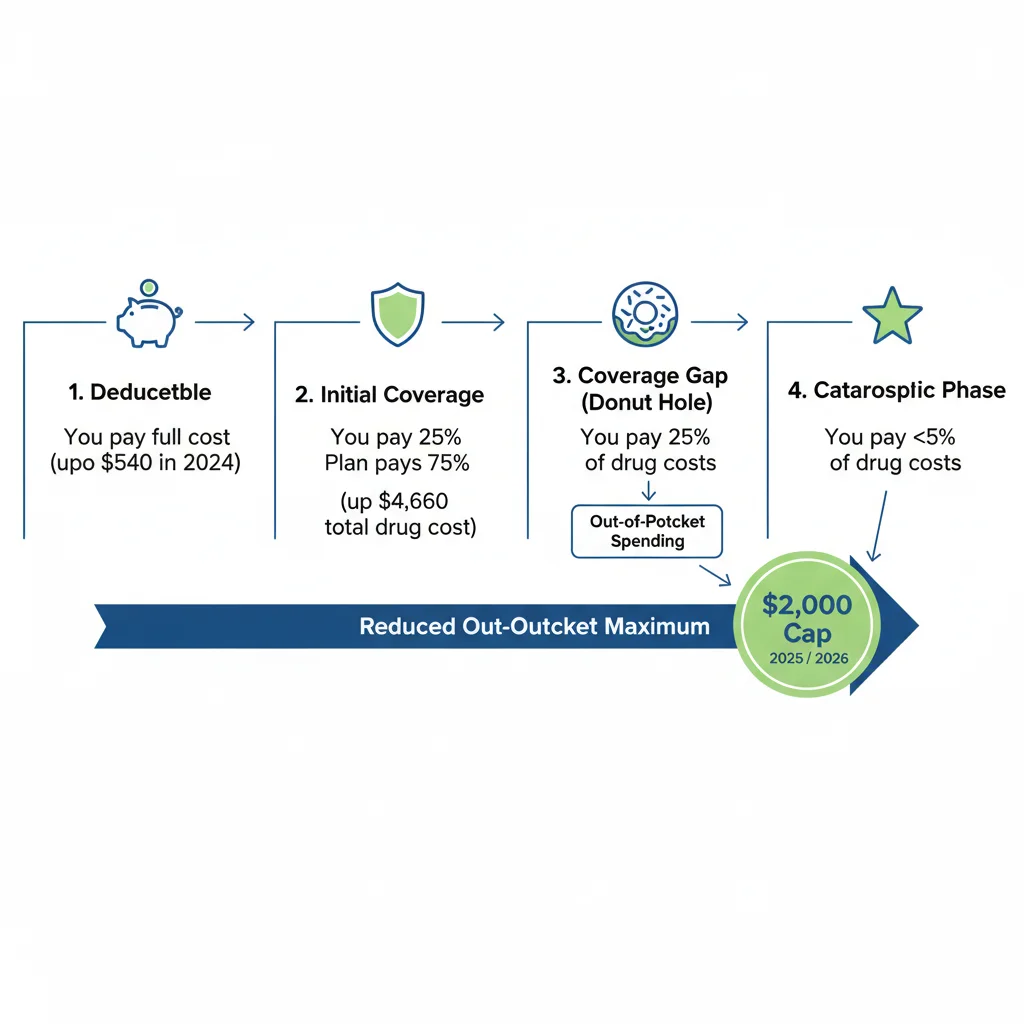
This is arguably the most impactful change. Starting in 2025, a $2,000 annual cap will be placed on out-of-pocket prescription drug costs for Part D beneficiaries. While this cap technically begins in 2025, its full impact and integration into the new benefit structure will be most evident in 2026. This means that once your out-of-pocket spending (including your deductible, copayments, and coinsurance) reaches $2,000 in a calendar year, you will pay nothing for covered Part D drugs for the remainder of the year. This provides immense financial relief and predictability, especially for those with high drug costs. Previously, there was no cap on out-of-pocket spending in the catastrophic phase, leaving some beneficiaries with tens of thousands of dollars in annual drug costs.
2. Elimination of the Coverage Gap (Donut Hole):
The infamous ‘donut hole’ will effectively be eliminated. While it has been gradually closing over the years, the Medicare Part D 2026 redesign will fully integrate it into the initial coverage phase. This means that once you meet your deductible, you will generally pay a set copayment or coinsurance until you reach the $2,000 out-of-pocket maximum, without entering a separate phase with different cost-sharing rules. This simplification makes the benefit structure much easier to understand and navigate.
3. Redefined Catastrophic Coverage:
Under the new structure, once you reach the $2,000 out-of-pocket cap, you will enter the catastrophic phase, but unlike the current system, you will have $0 cost-sharing for the remainder of the year. Previously, in the catastrophic phase, beneficiaries were still responsible for 5% of their drug costs, which could still amount to significant sums for those on very expensive medications. This change provides full protection against high drug costs.
4. Manufacturer Discounts and Government Subsidies:
The IRA shifts a greater financial responsibility to drug manufacturers and the federal government within the Part D program. Manufacturers will be required to provide a 10% discount on brand-name drugs in the initial coverage phase and a 20% discount in the catastrophic phase. The federal government’s share of costs in the catastrophic phase will also increase. These changes are designed to reduce the burden on Part D plans and, in turn, help control premium growth and beneficiary costs.
5. Premium Stabilization:
While not a direct cap, the IRA includes provisions aimed at limiting the growth of Part D premiums. The annual increase in the base beneficiary premium will be capped at 6% through 2029. This measure is intended to provide more stability and predictability for monthly premium costs, preventing sharp, unexpected increases.
These core changes represent a monumental shift in Medicare Part D 2026, fundamentally reshaping how beneficiaries pay for their prescription medications. For many, especially those with chronic conditions and high drug expenses, these reforms will translate into significant financial relief and greater peace of mind.
Practical Steps to Lower Your Prescription Costs by 15% (or More!)
Understanding the Medicare Part D 2026 redesign is the first step; the next is to proactively implement strategies to maximize your savings. While the new caps offer significant relief, there are still many ways to optimize your drug spending and potentially achieve a 15% reduction in your overall costs. Here’s how:
1. Re-evaluate Your Part D Plan Annually (Especially for 2025 and 2026):
This cannot be stressed enough. Even with the new caps, plans will still vary significantly in their formularies (list of covered drugs), deductibles, copayments, and preferred pharmacies. What was the best plan for you this year might not be next year, especially with the upcoming structural changes. During the Annual Enrollment Period (AEP) each fall, meticulously compare plans using Medicare’s Plan Finder tool. Pay close attention to:
- Formulary Coverage: Ensure all your current medications are covered, and check their tier level (which determines your copay).
- Pharmacy Network: Verify that your preferred pharmacies are in the plan’s network and if they offer preferred cost-sharing.
- Deductible and Copayments: While the $2,000 cap is significant, lower deductibles and copayments can reduce your out-of-pocket spending before you hit that cap.
- Monthly Premium: Balance the premium with the expected out-of-pocket costs for your specific drugs.
The goal is to find a plan that minimizes your total annual costs (premiums + out-of-pocket) based on your specific medication regimen. This single step can often lead to savings well over 15%.
2. Utilize Generics and Preferred Brands:
Always ask your doctor if a generic version of your medication is available. Generic drugs are chemically identical to their brand-name counterparts but typically cost significantly less. If a generic isn’t available, inquire about preferred brand-name drugs on your plan’s formulary. These often have lower copayments than non-preferred brands. A simple conversation with your doctor can unlock considerable savings.
3. Explore Mail-Order Pharmacies and 90-Day Supplies:
Many Part D plans offer lower costs for medications filled through their preferred mail-order pharmacy, especially for maintenance drugs. Opting for a 90-day supply instead of a 30-day supply can also reduce dispensing fees and often comes with a lower overall cost per pill. Check your plan’s benefits to see if these options are available and advantageous for you.
4. Investigate Patient Assistance Programs (PAPs) and Manufacturer Coupons:
Even with the $2,000 cap, some individuals may still struggle with the initial costs. Many pharmaceutical companies offer patient assistance programs for their brand-name drugs, often based on income. Websites like NeedyMeds.org and Partnership for Prescription Assistance are excellent resources for finding these programs. While manufacturer coupons typically don’t count towards your Part D out-of-pocket maximum, they can still help reduce your immediate costs.
5. Check for Low-Income Subsidies (LIS) / Extra Help:
If you have limited income and resources, you might qualify for Medicare’s Extra Help program, which significantly reduces Part D premiums, deductibles, and copayments. In 2024, the IRA expanded eligibility for Extra Help, making more people qualify for full subsidies. Even if you didn’t qualify before, it’s worth re-checking your eligibility now or in 2025. This program can provide substantial savings, often reducing costs to just a few dollars per prescription.
6. Discuss Therapeutic Alternatives with Your Doctor:
Sometimes, there are multiple drugs available to treat the same condition. Your doctor might be able to prescribe a therapeutically equivalent medication that is on a lower tier of your Part D plan’s formulary, thereby reducing your copayments. Always consult your physician before making any changes to your medication regimen.
7. Use GoodRx or Other Discount Cards for Non-Covered Drugs or Before Deductible:
For drugs not covered by your plan, or for costs incurred before you meet your deductible, discount cards like GoodRx, SingleCare, or those offered by warehouse clubs (Costco, Sam’s Club) can offer significant savings. Remember, money spent using these cards typically does not count towards your Part D deductible or out-of-pocket maximum, but they can still lower your immediate cash outlay.
8. Preventive Care and Healthy Lifestyle:
While not directly related to Part D structure, maintaining a healthy lifestyle and engaging in preventive care can reduce the need for expensive medications in the long run. Regular check-ups, managing chronic conditions effectively, and following your doctor’s advice can contribute to overall lower healthcare costs, including prescription drugs.
By diligently applying these strategies, you can take active control of your prescription drug spending under the new Medicare Part D 2026 framework. The $2,000 cap provides a safety net, but these proactive measures can help you stay well below that cap and achieve significant annual savings.
The Impact on Different Beneficiary Groups
The Medicare Part D 2026 redesign will have varying impacts depending on a beneficiary’s current prescription drug spending habits and health status. Understanding these distinctions can help you better assess how the changes will affect your personal finances.
Beneficiaries with High Prescription Drug Costs:
This group stands to benefit the most significantly from the Medicare Part D 2026 changes. Individuals who currently spend thousands of dollars annually on medications, especially those who reach the catastrophic phase, will experience substantial relief due to the $2,000 out-of-pocket cap and the elimination of 5% coinsurance in catastrophic coverage. For these beneficiaries, the redesign offers unprecedented financial protection and predictability, potentially saving them thousands of dollars each year.
Beneficiaries with Moderate Prescription Drug Costs:
Those with moderate drug costs, who might currently enter the coverage gap (‘donut hole’) but not necessarily reach catastrophic coverage, will also see benefits. The elimination of the coverage gap means more consistent cost-sharing throughout the year until the $2,000 cap is met. This group will likely experience increased predictability and potentially lower overall costs, depending on their specific plan’s deductible and copay structure.
Beneficiaries with Low Prescription Drug Costs:
For individuals who primarily take generic medications and have very low annual drug expenses, the impact of the $2,000 cap might be less direct, as they may not typically reach this spending threshold. However, they will still benefit from the overall stabilization of premiums and the simplification of the Part D benefit structure. Furthermore, the increased manufacturer discounts and government subsidies within the program are designed to help keep all drug costs, including those in the initial coverage phase, more manageable.
Beneficiaries Receiving Extra Help (Low-Income Subsidies):
The IRA also includes significant enhancements for the Extra Help program, expanding eligibility and providing more comprehensive subsidies. Starting in 2024, individuals with incomes up to 150% of the federal poverty level who meet resource limits qualify for full Extra Help benefits. This means reduced or eliminated premiums, deductibles, and very low fixed copayments for covered drugs. These beneficiaries will continue to receive substantial assistance, and the overall program changes will further solidify their access to affordable medications.
Considerations for Specific Conditions:
- Chronic Conditions: Individuals managing chronic diseases that require ongoing, often expensive, medications (e.g., certain autoimmune conditions, cancer, rare diseases) will find immense relief from the out-of-pocket cap. This eliminates the fear of unlimited spending.
- High-Cost Injectables/Specialty Drugs: For those on specialty medications, which often have very high list prices, the cap provides a crucial safety net, ensuring that their annual financial burden is limited.
In essence, while all Part D beneficiaries will be affected by the redesign, the most profound positive impact will be felt by those who have historically faced the highest out-of-pocket drug costs. The Medicare Part D 2026 changes are designed to bring greater equity and affordability to prescription drug coverage across the board.
The Role of Medicare Advantage Plans with Part D Coverage
Many Medicare beneficiaries receive their Part A (hospital), Part B (medical), and Part D (prescription drug) benefits through a Medicare Advantage plan (Part C). These plans, offered by private insurance companies approved by Medicare, must provide at least the same level of coverage as Original Medicare. The Medicare Part D 2026 redesign will also impact Medicare Advantage plans that include prescription drug coverage (MAPDs).
How MAPDs Will Adapt:
- Adherence to the $2,000 Cap: All MAPDs will be required to incorporate the $2,000 out-of-pocket cap for prescription drugs, just like standalone Part D plans. This means that beneficiaries in MAPDs will also be protected from unlimited drug spending.
- Benefit Structure Integration: MAPDs will need to adjust their formularies, deductibles, copayments, and coinsurance structures to align with the elimination of the coverage gap and the new catastrophic phase rules.
- Premium Adjustments: While MAPD premiums are generally lower or even $0 in many areas, the underlying costs for prescription drugs within these plans will still be influenced by the new manufacturer discounts and government subsidies. This could help stabilize or even reduce the drug portion of their premiums.
- Plan Comparisons Remain Crucial: Even with the standardized cap, the specifics of MAPD drug coverage will still vary. Beneficiaries in MAPDs will need to carefully review their plan’s Annual Notice of Change (ANOC) and utilize the Medicare Plan Finder during AEP to ensure their plan continues to meet their needs under the new rules. Factors like specific drug coverage, pharmacy networks, and additional benefits offered by MAPDs will remain key differentiators.
For those enrolled in a Medicare Advantage plan with drug coverage, the Medicare Part D 2026 redesign brings the same financial protections as it does for standalone Part D plans. The key is to remember that while the cap is universal, the journey to reaching that cap (via deductibles, copays, and formularies) will still differ between plans. Therefore, diligent plan comparison remains a cornerstone of smart Medicare planning.
Preparing for 2026: A Timeline and Checklist
While 2026 might seem a little distant, many of the preparatory steps can and should begin now. Being proactive will ensure you are well-positioned to take full advantage of the Medicare Part D 2026 redesign and lower your costs.
Immediate Actions (Now through 2024):
- Review Current Spending: Understand your current annual out-of-pocket drug costs. This baseline will help you gauge the impact of the changes.
- Check Extra Help Eligibility: If your income or resources are limited, investigate if you now qualify for Extra Help due to expanded eligibility under the IRA.
- Familiarize Yourself with Medicare.gov: The Medicare Plan Finder will be your best friend during AEP. Learn how to use it effectively.
- Discuss Medications with Your Doctor: Talk about generics, therapeutic alternatives, and 90-day supplies proactively.
Actions for 2025:
- Annual Enrollment Period (AEP) 2024 (for 2025 coverage): This is your first opportunity to choose a plan under the new rules, specifically with the $2,000 out-of-pocket cap in effect. Carefully compare all available Part D plans or MAPDs.
- Monitor Your Spending: Pay attention to how quickly you approach the $2,000 cap. This will be a new experience for many.
- Stay Informed: Continue to follow updates from Medicare and reliable sources about the full implementation of Medicare Part D 2026 reforms.
Actions for 2026 and Beyond:
- Annual Enrollment Period (AEP) 2025 (for 2026 coverage): This will be the first AEP where the full redesign, including the elimination of the coverage gap and the new catastrophic phase, is integrated into all plan offerings. A thorough review is critical.
- Continue Annual Plan Comparisons: Even after 2026, drug formularies, prices, and plan offerings can change year to year. Make annual plan comparison a habit.
- Re-evaluate Extra Help: If your financial situation changes, re-check eligibility for Extra Help.
This checklist provides a structured approach to navigating the upcoming changes. By taking these steps, you’ll not only understand the Medicare Part D 2026 redesign but actively leverage it to your financial advantage.
Conclusion: A Brighter Future for Medicare Part D Beneficiaries
The Medicare Part D 2026 redesign represents a monumental step forward in making prescription drugs more affordable and predictable for millions of Americans. The introduction of a $2,000 out-of-pocket cap, the elimination of the coverage gap, and the enhanced catastrophic coverage are poised to provide significant financial relief, particularly for those with chronic conditions and high medication costs.
While these structural changes are inherently beneficial, they don’t negate the need for proactive engagement from beneficiaries. The power to lower your prescription costs by 15% or more lies in your hands through informed decision-making and strategic planning. Annually reviewing your Part D plan, exploring generic alternatives, utilizing patient assistance programs, and staying engaged with your healthcare providers are all crucial steps to maximize your savings.
The future of Medicare Part D is one of greater stability and reduced financial burden. By understanding the intricacies of the Medicare Part D 2026 redesign and implementing the practical steps outlined in this guide, you can confidently navigate the evolving landscape of prescription drug coverage, ensuring you receive the medications you need without undue financial stress. Stay informed, stay proactive, and look forward to a future with more predictable and manageable prescription drug expenses.
This is not just about understanding policy; it’s about empowering yourself to make the best choices for your health and your wallet. The 2026 redesign offers a unique opportunity for savings, and with the right approach, you can truly take advantage of it.