
US Healthcare Reform Debates 2026: Key Developments
Early 2026 sees intense debates over US healthcare reform, focusing on access, cost containment, and equitable care delivery amidst evolving legislative proposals and significant public interest.

2026 Energy Policy Shift: Consumer Prices & Renewable Investments
The 2026 energy policy shift in the United States is poised to significantly impact consumer prices and accelerate renewable energy investments, driven by new regulations and incentives aimed at decarbonization.

National Security Alert: Top 3 Geopolitical Threats U.S. 2026
In 2026, the U.S. faces significant geopolitical threats, including heightened cyber warfare, the rise of revisionist powers, and climate-induced instability, demanding proactive and adaptive national security strategies.

2026 Midterm Elections: Polling Data Reveals Voter Sentiment Shifts
The 2026 midterm elections are rapidly approaching, and early polling data offers valuable insights into evolving voter sentiment across the United States. This analysis delves into key trends, demographic shifts, and the critical issues shaping the political landscape.

2026 Environmental Regulations: Reshaping U.S. Manufacturing
New environmental regulations slated for 2026 will profoundly reshape U.S. manufacturing, mandating significant shifts in energy consumption, waste management, and supply chain practices to foster a more sustainable industrial landscape.

2026 Federal Budget: Key Industry Impact Analysis
This article provides an in-depth expert analysis of the 2026 federal budget's anticipated impact on crucial U.S. industries, offering insights into potential economic shifts, growth areas, and challenges for businesses and consumers alike.

US Job Market January 2025: Unemployment at 3.7%
The Analysis of the Current US Job Market in January 2025: Unemployment Rate Holds Steady at 3.7% reveals a stable labor landscape, with key sectors showing resilience amidst evolving economic pressures affecting American employment.

US Renewable Energy Surges 10% in New Report
A recent report indicates a remarkable 10% surge in US renewable energy production over the last year, underscoring the nation's accelerating transition towards a greener, more sustainable energy landscape.
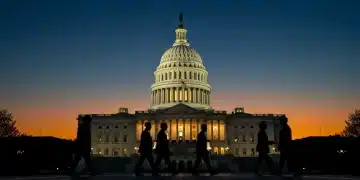
US Federal Budget 2025: Cuts, Increases, and Key Negotiations
The US Federal Budget 2025 negotiations are actively shaping government spending, with critical decisions impacting various sectors, from defense to social programs, and determining potential cuts or increases across key areas.

US Inflation Spike: Key Factors Driving Recent Price Increases
The recent 3-month spike in US inflation rates has raised concerns, driven by a complex interplay of factors including robust consumer demand, persistent supply chain issues, and geopolitical events. Understanding these dynamics is crucial for grasping current economic shifts.