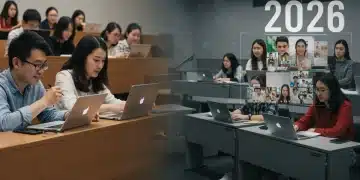
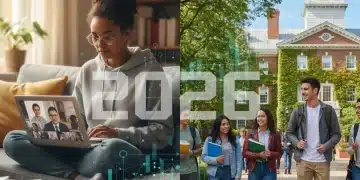
Beyond the Degree: Essential 21st-Century Skills U.S. Employers Demand by 2026

Anúncios
Beyond the Degree: Essential 21st-Century Skills U.S. Employers Demand by 2026
The landscape of employment in the United States is undergoing a profound transformation. For decades, a college degree was often considered the golden ticket to a successful career. While higher education remains invaluable, the evolving demands of the global economy and rapid technological advancements are shifting the focus from solely academic credentials to a broader array of capabilities. U.S. employers, looking ahead to 2026 and beyond, are increasingly prioritizing a specific set of 21st-century skills that transcend traditional qualifications. These aren’t just buzzwords; they are the fundamental building blocks for success in an increasingly complex, interconnected, and automated world. Understanding these vital Future Workforce Skills is not merely beneficial; it’s imperative for job seekers, educators, and organizations alike.
Anúncios
The shift is evident across industries. From tech giants to healthcare providers, manufacturing firms to service industries, the consistent message from hiring managers and HR professionals is clear: employees need more than just technical expertise. They need adaptability, critical thinking, emotional intelligence, and a host of other competencies that enable them to navigate ambiguity, innovate, and collaborate effectively. This article delves deep into these essential Future Workforce Skills, exploring why they are becoming non-negotiable and how individuals can cultivate them to thrive in the job market of tomorrow.
The Shifting Paradigm: Why Skills Trump Solely Degrees
For generations, the narrative was straightforward: get a degree, get a job. While this path still holds merit, the digital revolution, automation, and globalization have fundamentally altered the employer’s calculus. The shelf life of specific technical knowledge is shrinking, making continuous learning and the ability to apply foundational skills in new contexts more valuable. Employers are realizing that a degree, while demonstrating a baseline of knowledge and commitment, doesn’t always guarantee the agility, problem-solving prowess, or interpersonal finesse required for modern roles. The emphasis is now on what an individual can do and how they adapt, rather than solely on what they have studied.
Anúncios
This paradigm shift is driven by several factors. Firstly, the pace of technological change means that job roles are constantly evolving. Skills learned in a four-year degree program might be partially obsolete within a few years of graduation. Secondly, complex global challenges require interdisciplinary solutions, demanding individuals who can think across silos and collaborate with diverse teams. Thirdly, the rise of AI and automation is taking over routine, predictable tasks, leaving human workers to focus on tasks requiring higher-order cognitive and emotional skills. These are the core Future Workforce Skills that machines cannot easily replicate.
Understanding this evolution is crucial. It’s not about devaluing education; it’s about enriching it with a focus on practical, transferable skills. Educational institutions are beginning to respond by integrating more project-based learning, interdisciplinary studies, and experiential opportunities. For individuals, it means taking a proactive approach to skill development, recognizing that learning is a lifelong journey that extends far beyond formal schooling.
Critical Thinking and Problem-Solving: The Bedrock of Innovation
At the very core of the Future Workforce Skills lies critical thinking and problem-solving. In a world awash with information and increasingly complex challenges, the ability to analyze situations objectively, identify root causes, evaluate solutions, and make informed decisions is paramount. Employers need individuals who can move beyond simply executing instructions to actively contributing to strategic thinking and innovative solutions.
Critical thinking involves more than just identifying problems; it’s about asking the right questions, challenging assumptions, and considering multiple perspectives. It’s the capacity to dissect complex information, filter out noise, and synthesize insights that lead to actionable strategies. Problem-solving, on the other hand, is the application of critical thinking to devise practical solutions. This could range from optimizing a business process to resolving a customer complaint or developing a groundbreaking new product.
Developing these skills requires practice and exposure to diverse challenges. It involves learning to break down large problems into smaller, manageable parts, using logical reasoning, and embracing a trial-and-error mindset. Employers are looking for candidates who can demonstrate not just the right answer, but the thought process that led to it. They want employees who can anticipate problems before they arise and proactively seek ways to improve efficiency and effectiveness.
Adaptability and Flexibility: Navigating Constant Change
If there’s one constant in the modern world, it’s change. Economic shifts, technological breakthroughs, global events, and evolving customer expectations mean that the business environment is perpetually in flux. Consequently, adaptability and flexibility have emerged as non-negotiable Future Workforce Skills. Employers need individuals who can not only cope with change but thrive within it, quickly adjusting to new technologies, processes, and priorities.
Adaptability means being open to new ideas, learning new tools, and embracing different ways of working. It’s about resilience in the face of uncertainty and the willingness to step outside one’s comfort zone. Flexibility, in turn, refers to the capacity to adjust one’s approach, schedule, or role to meet evolving demands. This might involve cross-training, taking on new responsibilities, or shifting focus to urgent projects.
Organizations are increasingly structured to be agile, with cross-functional teams and iterative project cycles. Employees who resist change or struggle to learn new skills quickly become bottlenecks. Those who embrace change, demonstrate a growth mindset, and proactively seek opportunities to upskill and reskill are the ones who will drive success. This skill set is particularly important as industries undergo digital transformations and integrate artificial intelligence, requiring workers to continuously evolve their roles.

Digital Literacy and Technological Proficiency: The Language of the Future
In an increasingly digitized world, digital literacy is no longer a niche skill; it’s a foundational requirement for virtually every role. Beyond simply knowing how to use a computer, digital literacy encompasses the ability to effectively find, evaluate, create, and communicate information using digital technologies. This includes proficiency with common software applications, understanding data basics, navigating online tools, and a general comfort with digital environments. Technological proficiency extends this to understanding and interacting with emerging technologies relevant to one’s field.
By 2026, U.S. employers expect their workforce to be adept at leveraging technology for productivity, communication, and innovation. This doesn’t necessarily mean everyone needs to be a coder, but it does mean understanding how technology impacts their work, being able to troubleshoot common issues, and being open to learning new digital platforms. Data literacy, the ability to read, analyze, and communicate with data, is also becoming a critical component of digital proficiency, enabling better decision-making across all levels of an organization.
The rise of remote work and hybrid models has further amplified the need for strong digital literacy, as employees rely heavily on collaboration platforms, cloud-based tools, and virtual communication channels. Investing in digital upskilling, whether through online courses, certifications, or hands-on experience, is a direct investment in one’s future employability and a key aspect of developing essential Future Workforce Skills.
Communication and Collaboration: The Pillars of Team Success
No matter how brilliant an individual is, their impact is amplified through effective communication and collaboration. These interpersonal Future Workforce Skills are consistently ranked among the most important by employers. In today’s interconnected workplaces, success is rarely achieved in isolation. Teams are the engines of innovation and productivity, and their effectiveness hinges on how well members communicate and collaborate.
Effective communication goes beyond simply speaking or writing clearly. It involves active listening, empathy, the ability to articulate complex ideas concisely, and adapting one’s communication style to different audiences and situations. This includes both verbal and non-verbal cues, as well as proficiency in various communication mediums, from emails and instant messages to presentations and virtual meetings.
Collaboration involves working effectively with others towards a shared goal. This means being a good team player, respecting diverse perspectives, resolving conflicts constructively, and contributing positively to team dynamics. It also includes the ability to share knowledge, provide constructive feedback, and leverage the strengths of each team member. As organizations become more diverse and global, the ability to collaborate across cultural and geographical boundaries becomes even more vital.
Creativity and Innovation: Driving Future Growth
While automation handles routine tasks, the uniquely human capacities for creativity and innovation are becoming increasingly valuable. Employers are seeking individuals who can think outside the box, generate novel ideas, and challenge the status status quo to drive growth and competitive advantage. Creativity isn’t just for artists or designers; it’s a mindset applicable to every role, from optimizing a spreadsheet to developing a new marketing campaign.
Innovation is the practical application of creative ideas to create value. This might involve developing new products or services, improving existing processes, or finding novel solutions to long-standing problems. Companies that foster a culture of creativity and innovation are better positioned to adapt to market changes, differentiate themselves, and stay ahead of the curve. These are crucial Future Workforce Skills for any organization aiming for sustained success.
Cultivating creativity involves curiosity, experimentation, and a willingness to take calculated risks. It also means embracing failure as a learning opportunity and being open to feedback. Employers value candidates who can demonstrate their creative problem-solving abilities, whether through past projects, hobbies, or innovative approaches to challenges they’ve faced. Encouraging an environment where new ideas are welcomed and explored is key to harnessing this powerful skill set.

Emotional Intelligence (EQ): The Human Advantage
As workplaces become more automated, the human element becomes even more critical. Emotional Intelligence (EQ) — the ability to understand, use, and manage one’s own emotions in positive ways to relieve stress, communicate effectively, empathize with others, overcome challenges, and defuse conflict — is emerging as a top Future Workforce Skill. Employers recognize that high EQ contributes significantly to team cohesion, leadership effectiveness, and overall organizational culture.
EQ encompasses several key components: self-awareness (understanding one’s own emotions and their impact), self-regulation (managing one’s emotions and impulses), motivation (driving oneself towards goals), empathy (understanding and sharing the feelings of others), and social skills (managing relationships and building networks). Employees with high EQ are better at navigating workplace dynamics, managing stress, inspiring others, and fostering a positive work environment.
In roles that involve client interaction, team leadership, or conflict resolution, EQ is often more important than technical skills alone. It’s the ability to read a room, understand unspoken cues, and respond appropriately. While sometimes considered ‘soft skills,’ these are anything but soft; they are fundamental to effective human interaction and directly impact productivity and profitability. Developing EQ involves self-reflection, seeking feedback, and conscious practice in interpersonal interactions.
Leadership and Management: Guiding the Way Forward
While often associated with senior roles, leadership and management skills are increasingly sought at all levels of an organization. Effective leadership isn’t just about directing others; it’s about inspiring, mentoring, empowering, and facilitating success. These Future Workforce Skills are crucial for building high-performing teams and navigating complex projects.
Leadership involves the ability to articulate a vision, motivate individuals towards common goals, and make difficult decisions. It requires integrity, accountability, and the capacity to build trust. Management, on the other hand, focuses on planning, organizing, coordinating resources, and overseeing tasks to ensure efficient execution. Both are vital for organizational success.
Even individual contributors are often expected to demonstrate leadership in their specific areas of expertise, taking ownership of projects, mentoring junior colleagues, or leading informal initiatives. As organizations flatten their hierarchies, the demand for distributed leadership capabilities grows. Developing these skills can involve taking on project lead roles, volunteering for committees, seeking mentorship, and participating in leadership development programs. These skills are essential for career progression and for contributing strategically to any organization.
Cross-Cultural Competence: Thriving in a Globalized World
The U.S. workforce and economy are inextricably linked to global markets. Companies operate internationally, and even local businesses often serve diverse customer bases. Consequently, cross-cultural competence is becoming an indispensable Future Workforce Skill. This involves the ability to understand, appreciate, and effectively interact with people from different cultural backgrounds, whether within a diverse domestic team or in international business dealings.
Cross-cultural competence extends beyond simply being polite; it requires an understanding of different communication styles, work ethics, social norms, and decision-making processes. It helps prevent misunderstandings, builds stronger relationships, and fosters more inclusive and effective working environments. As global supply chains and remote international teams become more common, this skill set is no longer a luxury but a necessity.
Developing cross-cultural competence can involve learning about different cultures, seeking out diverse perspectives, engaging in international travel or work experiences, and practicing empathy. It’s about being open-minded, adaptable, and respectful of differences, recognizing that there are many valid ways of approaching work and life. This skill not only enhances professional interactions but also enriches one’s personal worldview.
Continuous Learning and Growth Mindset: The Lifelong Journey
Perhaps the most overarching and fundamental of all Future Workforce Skills is the commitment to continuous learning and the cultivation of a growth mindset. Given the accelerating pace of change across all industries, the idea that one’s education ends after a degree is obsolete. To remain relevant and competitive, individuals must embrace learning as a lifelong journey.
A growth mindset, as coined by Carol Dweck, is the belief that one’s abilities and intelligence can be developed through dedication and hard work. It contrasts with a fixed mindset, which assumes these traits are static. Employers are actively seeking individuals with a growth mindset because they are more resilient, open to feedback, eager to learn new things, and willing to take on challenges. They see obstacles as opportunities for development rather than insurmountable barriers.
Continuous learning involves actively seeking out new knowledge, acquiring new skills, and staying updated on industry trends. This can take many forms: online courses, workshops, industry conferences, reading professional literature, mentorship, or simply experimenting with new tools and techniques. Organizations are increasingly investing in upskilling and reskilling programs, but individual initiative is key. Demonstrating a proactive approach to personal and professional development signals to employers that an individual is ready for the future.
Preparing for 2026 and Beyond: Actionable Steps
For individuals, preparing for the future workforce means taking a proactive approach to skill development. It’s about auditing your current skill set, identifying gaps in the Future Workforce Skills outlined above, and creating a personal development plan. This could involve:
- Online Courses and Certifications: Platforms like Coursera, edX, LinkedIn Learning, and specialized industry certifications offer accessible ways to acquire new knowledge and verifiable skills.
- Experiential Learning: Volunteer for projects, seek out stretch assignments, or take on new responsibilities that push you to develop new competencies.
- Mentorship and Networking: Learn from experienced professionals, seek feedback, and build a network that can provide insights and opportunities.
- Reading and Research: Stay informed about industry trends, technological advancements, and best practices in your field.
- Self-Reflection and Practice: Consciously practice critical thinking, communication, and emotional intelligence in daily interactions.
For employers, the challenge is to foster a culture that values and develops these skills. This includes:
- Rethinking Hiring Practices: Move beyond degree-centric hiring to skills-based assessments and behavioral interviews that evaluate critical 21st-century competencies.
- Investing in Learning & Development: Provide continuous upskilling and reskilling opportunities for your existing workforce.
- Creating a Culture of Psychological Safety: Encourage experimentation, learning from mistakes, and open communication to foster creativity and innovation.
- Promoting Diversity and Inclusion: Diverse teams bring a wider range of perspectives, enhancing problem-solving and innovation.
Conclusion: The Human Element in a Digital Age
The U.S. job market of 2026 will undoubtedly be more dynamic, more technologically advanced, and more globally integrated than ever before. While technical skills will always be important, the true differentiator for individuals and organizations will be the mastery of essential 21st-century Future Workforce Skills. These are the human capabilities that machines cannot replicate: critical thinking, adaptability, digital fluency, effective communication, creativity, emotional intelligence, leadership, cross-cultural competence, and an unwavering commitment to lifelong learning.
As we move further into the digital age, the value of the human element only grows. Those who proactively cultivate these skills will not only secure their own professional futures but will also be instrumental in driving innovation, solving complex societal challenges, and shaping a more prosperous and adaptable economy. The future of work isn’t just about technology; it’s about empowering humans to thrive alongside it.
Author