Budgeting for 2026: Master the 50/30/20 Rule for Financial Freedom

Anúncios
Budgeting for 2026: Master the 50/30/20 Rule for Financial Freedom
As we look ahead to 2026, many of us are setting new goals, both personal and professional. Among the most crucial, yet often overlooked, is financial planning. Achieving financial stability and paving the way for future growth requires a solid budgeting strategy. One of the most effective and straightforward methods gaining widespread popularity is the 50/30/20 budget rule. This rule simplifies money management, making it accessible for everyone, regardless of their financial background.
Anúncios
In this comprehensive guide, we will delve deep into the 50/30/20 budget rule, exploring its core principles, how to implement it effectively for 2026, and practical tips to ensure your financial success. Whether you’re aiming to save for a down payment, pay off debt, or simply gain better control over your spending, understanding and applying this rule can be your roadmap to financial freedom.
Understanding the Core of the 50/30/20 Budget Rule
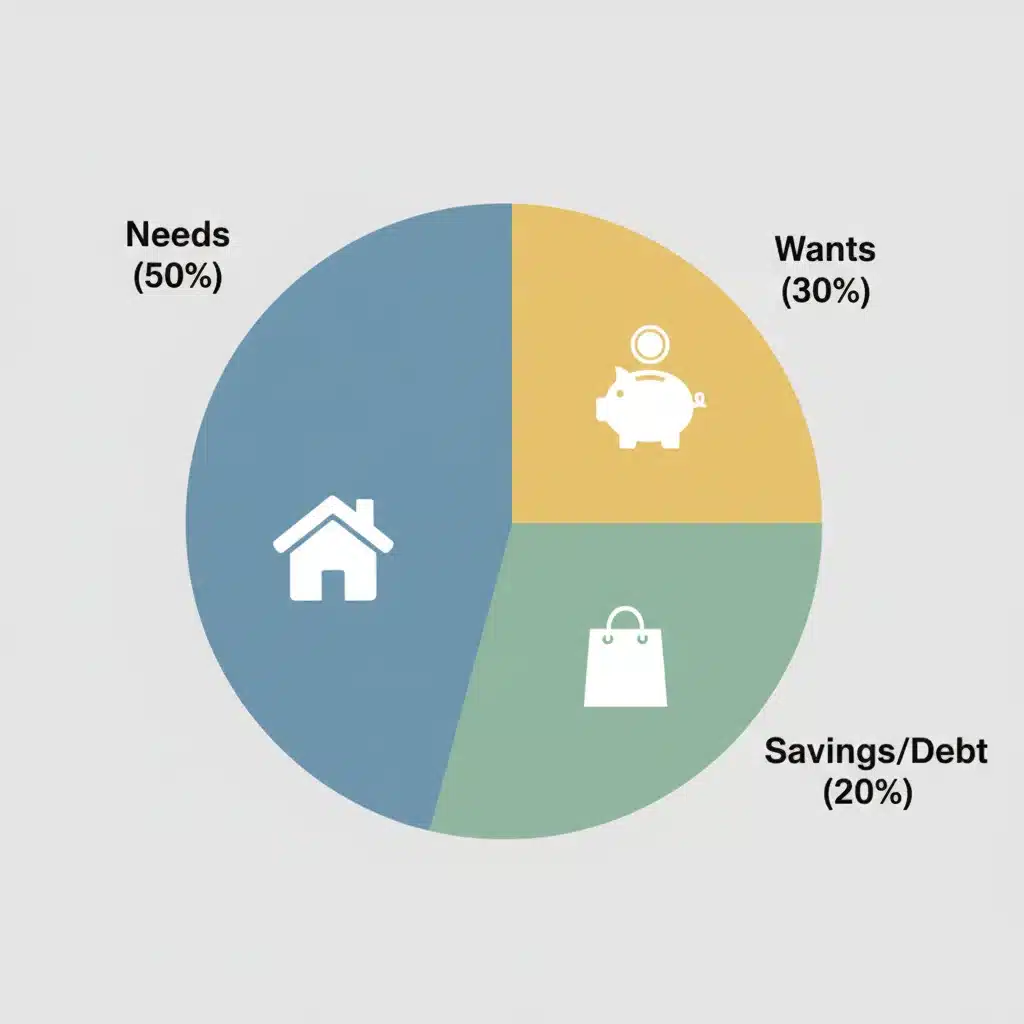
The 50/30/20 budget rule is a simple yet powerful guideline for allocating your after-tax income. It suggests dividing your income into three main categories:
Anúncios
- 50% for Needs: Essential expenses that you cannot live without.
- 30% for Wants: Discretionary spending that improves your quality of life but isn’t strictly necessary.
- 20% for Savings & Debt Repayment: Future financial goals and reducing outstanding debts.
This rule, popularized by Senator Elizabeth Warren and her daughter Amelia Warren Tyagi in their book All Your Worth: The Ultimate Lifetime Money Plan, provides a balanced approach to personal finance. It acknowledges the importance of both essential living and personal enjoyment, while strongly emphasizing future financial security. For 2026, adopting the 50/30/20 budget rule can help you create a clear, actionable financial plan.
Why the 50/30/20 Budget Rule Works
The simplicity of the 50/30/20 budget rule is its greatest strength. Unlike overly restrictive budgets that can be difficult to maintain, this rule offers flexibility while still providing clear boundaries. It prevents overspending in one area at the expense of another, fostering a healthy financial ecosystem. By categorizing expenses, it also helps you identify areas where you might be overspending and adjust accordingly. This makes it an ideal framework for anyone looking to optimize their finances in 2026.
Breaking Down Each Category of the 50/30/20 Budget Rule for 2026
To effectively implement the 50/30/20 budget rule, it’s crucial to understand what falls into each category. Let’s break them down with examples relevant to your financial planning for 2026.
50% for Needs: Your Essentials
Needs are the non-negotiable expenses required for survival and maintaining your current lifestyle. These are costs you absolutely must pay to live and work. For 2026, carefully evaluate your needs as they can fluctuate with inflation and life changes.
What Constitutes a ‘Need’?
- Housing: Rent or mortgage payments, property taxes, home insurance.
- Utilities: Electricity, gas, water, internet (essential for work/communication).
- Food: Groceries for home-cooked meals. Dining out falls under ‘wants.’
- Transportation: Car payments, insurance, fuel, public transit fares necessary for commuting.
- Healthcare: Health insurance premiums, essential medications, unavoidable medical appointments.
- Minimum Debt Payments: The minimum required payments on credit cards, student loans, or other debts to avoid penalties and maintain good credit.
- Childcare: Essential for working parents.
Tips for Managing Your 50% Needs
- Audit Regularly: Review your ‘needs’ periodically. Can you find a cheaper internet plan? Is there a more affordable grocery store?
- Distinguish from Wants: Be honest with yourself. Is that premium cable package truly a ‘need’ or a ‘want’?
- Negotiate: Don’t be afraid to negotiate bills like insurance or internet services to reduce your monthly outgo.
- Emergency Fund: Ensure your needs are covered even in unexpected situations by having an emergency fund (which comes from your 20% savings).
30% for Wants: Enhancing Your Life
Wants are expenses that improve your quality of life but are not strictly necessary. These are the things you spend money on for enjoyment, convenience, or entertainment. This category allows for personal fulfillment within your budget.
What Constitutes a ‘Want’?
- Dining Out & Takeaway: Restaurants, coffee shops, food delivery services.
- Entertainment: Streaming subscriptions (Netflix, Hulu), movies, concerts, video games, hobbies.
- Shopping: New clothes (beyond basic necessities), gadgets, home decor.
- Vacations & Travel: Leisure trips, weekend getaways.
- Hobbies & Memberships: Gym memberships (if not essential for health), club memberships, expensive hobbies.
- Beauty & Personal Care: Haircuts, spa treatments, non-essential cosmetics.
- Premium Services: Upgraded phone plans, premium cable channels.
Tips for Managing Your 30% Wants
- Prioritize: Decide which wants bring you the most joy and cut back on those that don’t.
- Track Spending: It’s easy for ‘wants’ to creep up. Use budgeting apps to monitor this category closely.
- Delayed Gratification: Instead of immediate purchases, save up for larger ‘wants’ to avoid impulse buying.
- Find Free/Low-Cost Alternatives: Explore free entertainment options like parks, libraries, or community events.
20% for Savings & Debt Repayment: Building Your Future
This is arguably the most critical component of the 50/30/20 budget rule for long-term financial health. This 20% should be dedicated to building your financial future and reducing your liabilities.
What Constitutes ‘Savings & Debt Repayment’?
- Emergency Fund: A crucial safety net, typically 3-6 months of living expenses, for unexpected events like job loss or medical emergencies.
- Retirement Savings: Contributions to 401(k), IRA, Roth IRA, or other retirement accounts.
- Investments: Contributions to brokerage accounts for long-term wealth growth.
- Debt Acceleration: Any payments above the minimum on high-interest debts like credit cards, personal loans, or student loans.
- Future Goals: Saving for a down payment on a house, a car, education, or a significant life event.
Tips for Maximizing Your 20% Savings & Debt Repayment
- Automate Savings: Set up automatic transfers from your checking to your savings or investment accounts immediately after you get paid.
- Prioritize High-Interest Debt: If you have high-interest debt, consider prioritizing paying it off before focusing heavily on other savings goals (after establishing a small emergency fund).
- Review Progress: Regularly check your savings and debt repayment progress to stay motivated and make adjustments.
- Increase Contributions: As your income grows, try to increase your savings percentage.
How to Implement the 50/30/20 Budget Rule for 2026: A Step-by-Step Guide
Ready to put the 50/30/20 budget rule into action for 2026? Follow these steps to set yourself up for success.
Step 1: Calculate Your After-Tax Income
Your after-tax income (also known as net income) is the amount of money you take home after all deductions (taxes, health insurance premiums, retirement contributions, etc.) have been taken out of your gross pay. This is the baseline for your 50/30/20 budget rule calculations.
Example: If your monthly gross income is $5,000 and $1,000 is deducted for taxes and benefits, your after-tax income is $4,000.
Step 2: Determine Your Budget Allocations
Once you have your after-tax income, apply the 50/30/20 percentages:
- Needs (50%): $4,000 x 0.50 = $2,000
- Wants (30%): $4,000 x 0.30 = $1,200
- Savings & Debt Repayment (20%): $4,000 x 0.20 = $800
These are your target spending limits for each category for 2026.
Step 3: Track Your Spending
For at least one month, meticulously track every dollar you spend. This will give you a clear picture of where your money is actually going. You can use:
- Budgeting Apps: Mint, YNAB (You Need A Budget), Personal Capital, or Simplifi.
- Spreadsheets: Google Sheets or Excel for manual tracking.
- Notebooks: A simple pen-and-paper method if you prefer.
Categorize each expense as a need, want, or savings/debt repayment. This step is crucial for identifying discrepancies between your actual spending and your target allocations based on the 50/30/20 budget rule.

Step 4: Adjust and Optimize
After tracking your spending, compare it to your 50/30/20 targets. Are you overspending in one category? Under-saving in another? This is where you make adjustments.
- If your Needs exceed 50%: Look for ways to reduce essential expenses. Can you refinance your mortgage, find a cheaper rental, cut down on grocery bills, or reduce transportation costs? This might be the hardest category to adjust, but even small changes can make a big difference.
- If your Wants exceed 30%: This is often the easiest category to trim. Identify discretionary spending that doesn’t bring significant value and cut it. Do you really need all those streaming services? Can you cook at home more often?
- If your Savings & Debt Repayment is less than 20%: This is a red flag. You’ll need to reallocate funds from your ‘needs’ or ‘wants’ categories to reach this crucial target. Prioritize this percentage for your future financial security in 2026.
Step 5: Automate and Review Regularly
Once you’ve aligned your spending with the 50/30/20 budget rule, automate as much as possible. Set up automatic transfers for savings and debt payments. Schedule bill payments so you don’t miss them. Regularly review your budget (monthly or quarterly) to ensure it still aligns with your income, expenses, and financial goals for 2026. Life changes, and so should your budget.
Common Challenges and Solutions for the 50/30/20 Budget Rule
While the 50/30/20 budget rule is straightforward, implementing it can present challenges. Here are some common hurdles and how to overcome them:
Challenge 1: Needs Exceed 50%
Solution: This is a common issue, especially in high cost-of-living areas. First, rigorously evaluate if any ‘needs’ are actually ‘wants’ in disguise. If not, consider larger changes: finding a more affordable living situation, reducing transportation costs (e.g., carpooling, public transport), or seeking additional income streams to increase your overall budget. Sometimes, the 50/30/20 rule might need slight modification to 60/20/20 or similar for a temporary period, but always strive to get back to the ideal.
Challenge 2: Difficulty Cutting Down on Wants
Solution: It’s hard to give up things you enjoy. Start small. Instead of eliminating all dining out, reduce it by half. Implement a ‘no-spend’ day or week. Find free alternatives for entertainment. Remember your long-term financial goals; sometimes, a small sacrifice now leads to greater rewards later. The 50/30/20 budget rule isn’t about deprivation, but mindful spending.
Challenge 3: Inconsistent Income
Solution: If you have a variable income (freelancers, commission-based jobs), budgeting can be tricky. Base your 50/30/20 budget rule on your lowest expected monthly income. When you have higher-income months, allocate the surplus primarily to your savings and debt repayment category, or build a buffer for leaner months. This creates stability.
Challenge 4: Overwhelmed by Debt
Solution: If a significant portion of your 20% is consumed by minimum debt payments, it can feel discouraging. Focus on the ‘debt snowball’ or ‘debt avalanche’ method to tackle high-interest debts aggressively. Even small extra payments can make a big difference over time. Remember, paying off debt is a form of saving, as it frees up future income.
Beyond the Numbers: The Philosophy of the 50/30/20 Budget Rule
The 50/30/20 budget rule is more than just a set of percentages; it’s a philosophy for financial well-being. It encourages conscious spending, mindful saving, and responsible debt management. By adhering to this rule in 2026, you’re not just moving numbers around; you’re building habits that will serve you for a lifetime.
Financial Freedom and Peace of Mind
Imagine the peace of mind that comes from knowing your essential needs are covered, you have room for enjoyable experiences, and you’re actively building a secure future. That’s the promise of the 50/30/20 budget rule. It reduces financial stress, allows you to pursue your goals, and provides a clear path to financial independence. For 2026, make financial peace a priority.
Flexibility and Adaptability
While the 50/30/20 rule provides a strong framework, it’s not rigid. Life happens. Your income may change, your needs might evolve, or you might have a short-term goal that requires adjusting the percentages temporarily. The key is to be aware of your allocations and adjust them intentionally, always striving to return to the core principles when possible. This adaptability makes the 50/30/20 budget rule a sustainable long-term strategy.
Conclusion: Your Financial Future in 2026 with the 50/30/20 Budget Rule
As you plan for 2026, adopting the 50/30/20 budget rule can be one of the most impactful decisions you make for your financial health. It’s a simple, effective, and balanced approach to managing your money that prioritizes both present well-being and future security. By clearly defining your needs, wants, and savings, you gain control, reduce stress, and set yourself on a clear path towards achieving your financial aspirations.
Start today by calculating your income, tracking your spending, and making conscious adjustments. Remember, financial mastery is a journey, not a destination. With consistency and discipline, the 50/30/20 budget rule will empower you to build a robust financial foundation and enjoy greater freedom and peace of mind throughout 2026 and beyond. Your future self will thank you for taking control of your finances now.
Author