US Renewable Energy Policy Shifts 2026: A Deep Dive
Anúncios
The Future is Now: Analyzing US Renewable Energy Policy Shifts in 2026
The global energy landscape is in constant flux, driven by technological innovation, environmental imperatives, and evolving geopolitical dynamics. In the United States, the commitment to a cleaner, more sustainable energy future is becoming increasingly tangible, with significant legislative and policy shifts anticipated in the coming years. As we look towards 2026, understanding the trajectory of US renewable policy 2026 is crucial for stakeholders across industries, from energy producers and investors to consumers and policymakers.
Anúncios
The year 2026 stands as a pivotal moment, poised to solidify or redefine the nation’s path towards a predominantly renewable energy grid. This comprehensive analysis delves into the expected policy changes, their potential impacts, and the broader implications for the US and the global energy transition. We will explore how legislative frameworks, economic incentives, and technological advancements are converging to shape a new era of energy production and consumption.
The Current Landscape: Foundation for US Renewable Policy 2026
Anúncios
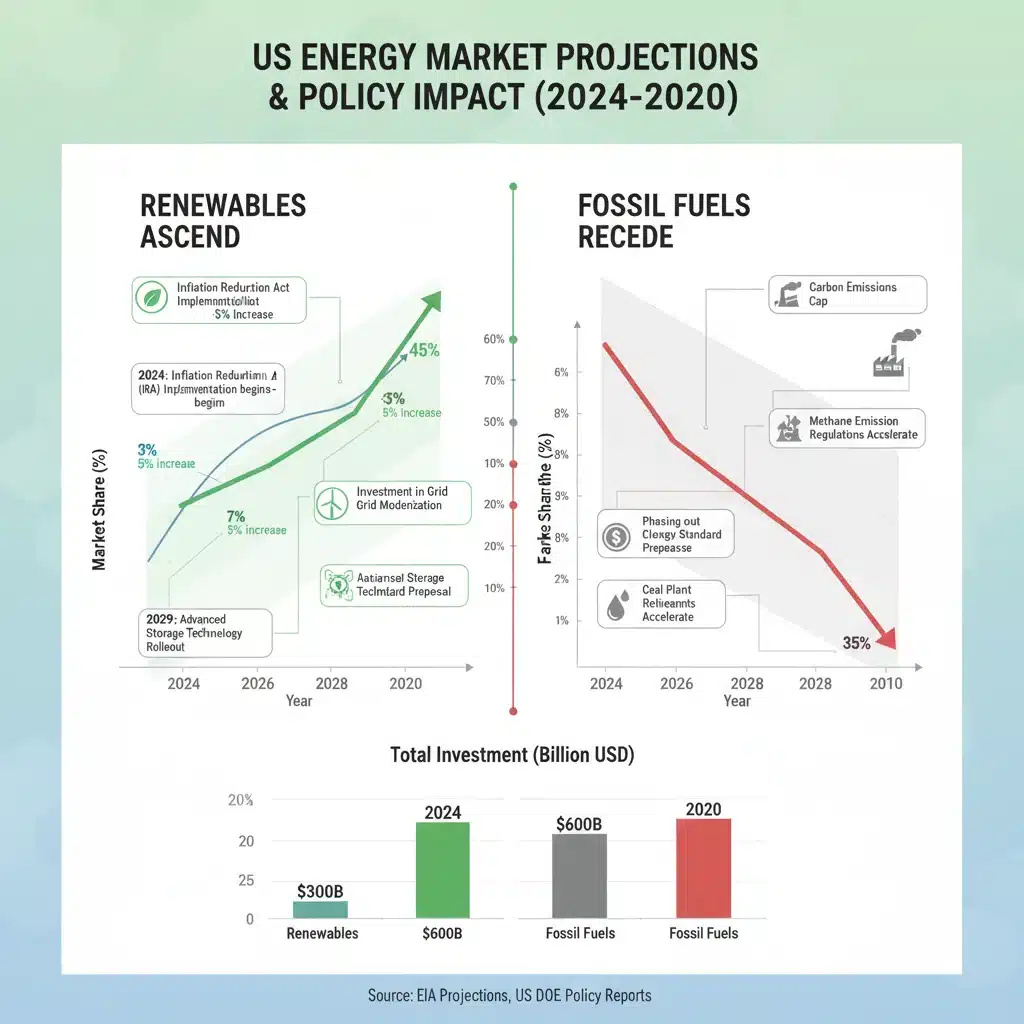
Before we project forward to 2026, it’s essential to understand the current state of renewable energy policy in the US. Over the past decade, significant strides have been made, largely propelled by federal initiatives like the Inflation Reduction Act (IRA) of 2022, state-level Renewable Portfolio Standards (RPS), and a growing corporate commitment to sustainability. These policies have spurred unprecedented investment in solar, wind, and battery storage technologies, driving down costs and increasing deployment.
The IRA, in particular, has been a game-changer, offering long-term tax credits and incentives for renewable energy generation, manufacturing, and deployment. This has created a stable investment environment, encouraging both domestic and international players to commit to the US clean energy market. However, challenges remain, including grid modernization needs, transmission infrastructure bottlenecks, and permitting complexities.
Key Drivers Shaping Future Policy
- Climate Change Imperatives: The increasing urgency to mitigate climate change continues to be a primary driver for accelerating the transition to renewables. International agreements and domestic scientific consensus exert pressure for more aggressive decarbonization targets.
- Energy Security: Geopolitical events have underscored the importance of energy independence and security. Diversifying the energy mix with domestic renewable sources reduces reliance on volatile global fossil fuel markets.
- Economic Competitiveness: The renewable energy sector is a significant job creator and an engine for economic growth. Policies that foster innovation and manufacturing in this sector enhance US competitiveness.
- Technological Advancements: Continuous improvements in efficiency, storage capacity, and cost-effectiveness of renewable technologies make them increasingly attractive and viable alternatives to traditional energy sources.
- Public Demand: Growing public awareness and demand for clean energy solutions are influencing political agendas and corporate strategies.
Anticipated Legislative Frameworks and Incentives for US Renewable Policy 2026
As we approach 2026, several legislative and regulatory fronts are expected to see significant activity, directly impacting US renewable policy 2026. While the exact details will depend on the political climate and congressional priorities, certain trends are discernible.
Extension and Refinement of Tax Credits
The long-term nature of the IRA’s tax credits provides a degree of certainty, but discussions around their extension, modification, and expansion are likely to continue. There might be efforts to streamline the application process, address specific industry needs (e.g., offshore wind, geothermal), or introduce new incentives for emerging technologies like green hydrogen or advanced nuclear. The goal will be to ensure these incentives remain effective in driving investment and deployment, potentially adjusting based on market conditions and technological maturity.
Grid Modernization and Transmission Expansion
One of the most critical bottlenecks for widespread renewable energy adoption is the aging and inadequate electrical grid infrastructure. Expect significant legislative pushes and funding initiatives aimed at modernizing the grid, enhancing its resilience, and expanding transmission capacity to bring renewable energy from remote generation sites to population centers. This could involve federal permitting reform, interstate compacts, and substantial public-private partnerships. The focus will be on smart grid technologies, energy storage integration, and flexible demand-side management.
Permitting Reform for Renewable Projects
The lengthy and complex permitting processes for large-scale renewable energy projects (e.g., solar farms, wind farms, transmission lines) are a major impediment. There is growing bipartisan recognition of the need for reform to accelerate project development while maintaining environmental safeguards. US renewable policy 2026 is likely to see proposals aimed at streamlining federal and state permitting, potentially establishing clearer timelines, and improving inter-agency coordination. This could include fast-tracking projects deemed critical for national energy security or climate goals.
State-Level Policy Innovations
While federal policy sets a broad framework, states often lead the way in specific innovations. In 2026, we can anticipate states continuing to refine their Renewable Portfolio Standards (RPS), setting more ambitious clean energy targets, and introducing innovative mechanisms for community solar, energy storage mandates, and electric vehicle infrastructure development. These state-level policies will complement federal efforts, creating a dynamic and diverse policy landscape across the nation.
Economic Implications and Investment Opportunities
The shifts in US renewable policy 2026 will have profound economic implications, creating both challenges and immense opportunities. The clean energy transition is not just about environmental protection; it’s also a significant economic driver.
Job Creation and Workforce Development
The renewable energy sector is a rapidly expanding source of jobs, from manufacturing and installation to operations and maintenance. Policy shifts in 2026 are expected to further accelerate this trend, necessitating significant investment in workforce development and training programs. This includes retraining workers from traditional fossil fuel industries, fostering STEM education, and developing specialized skills for the green economy.
Increased Investment in Clean Technologies
A stable and supportive policy environment will attract further domestic and international investment into clean energy technologies. This includes not only mature technologies like solar and wind but also emerging areas such as advanced battery storage, green hydrogen production, carbon capture, and next-generation geothermal. Venture capital, private equity, and corporate R&D spending are all expected to surge in response to clear policy signals.
Supply Chain Resilience and Domestic Manufacturing
Recent global disruptions have highlighted the vulnerabilities in complex supply chains. US renewable policy 2026 is likely to emphasize strengthening domestic manufacturing capabilities for renewable energy components, from solar panels and wind turbine blades to battery cells and critical minerals processing. Incentives for ‘Made in America’ components will aim to reduce reliance on foreign supply chains and create more resilient, localized economies.
Impact on Traditional Energy Sectors
The accelerating shift towards renewables will undoubtedly impact traditional fossil fuel industries. Policies in 2026 may include provisions for a just transition, supporting communities and workers affected by the decline of coal, oil, and gas. This could involve funding for economic diversification, job retraining, and environmental remediation efforts in former fossil fuel regions.
Technological Advancements and Their Role in US Renewable Policy 2026
Policy and technology are inextricably linked in the energy transition. Legislative frameworks often aim to accelerate the adoption of new technologies, while technological breakthroughs can, in turn, influence and enable more ambitious policy goals. For US renewable policy 2026, several technological areas will be particularly crucial.
Energy Storage Solutions
The intermittency of solar and wind power necessitates robust energy storage solutions. Beyond lithium-ion batteries, expect increased policy support for long-duration storage technologies such as pumped hydro, compressed air energy storage, flow batteries, and even thermal storage. Research and development incentives, along with deployment targets, will be key to making these technologies commercially viable at scale.
Advanced Grid Technologies (Smart Grids)
A modernized, intelligent grid is fundamental to integrating high levels of renewable energy. This includes smart meters, advanced sensors, automated controls, and sophisticated software for demand-side management. Policies in 2026 will likely encourage investments in these technologies to improve grid reliability, efficiency, and flexibility, allowing for better management of distributed energy resources.
Green Hydrogen
Green hydrogen, produced using renewable electricity to split water, is emerging as a critical tool for decarbonizing hard-to-abate sectors like heavy industry, long-haul transportation, and aviation. While still in its nascent stages, US renewable policy 2026 could see significant incentives for green hydrogen production, infrastructure development (pipelines, storage), and end-use applications. This could involve production tax credits, grants for pilot projects, and regulatory frameworks to establish a clean hydrogen market.
Carbon Capture, Utilization, and Storage (CCUS)
While primarily associated with fossil fuel power plants and industrial emissions, CCUS technologies are also being explored for their potential to remove carbon directly from the atmosphere (Direct Air Capture). Policies in 2026 may continue to support CCUS research, development, and deployment, particularly for sectors where electrification or direct renewable energy use is challenging. The debate around CCUS’s role in a renewable future will likely continue, but targeted support for specific applications remains probable.
Challenges and Opportunities for US Renewable Policy 2026
The path to a clean energy future is not without its hurdles. US renewable policy 2026 will need to address a range of challenges while capitalizing on emerging opportunities.
Overcoming Political and Regulatory Hurdles
Political polarization can hinder the passage of comprehensive energy legislation. Bipartisan consensus on key aspects, such as grid modernization and permitting reform, will be crucial. Furthermore, navigating complex federal, state, and local regulatory environments requires careful coordination and clear guidelines to avoid delays and uncertainty for developers.
Ensuring Energy Equity and Affordability
As the energy transition progresses, it’s vital to ensure that the benefits of clean energy are accessible to all, including low-income communities and historically disadvantaged groups. Policies in 2026 should focus on energy equity, providing incentives for community solar projects, energy efficiency upgrades, and job training opportunities in underserved areas. Maintaining energy affordability during the transition is also a key concern, requiring careful market design and consumer protections.
Managing Resource Constraints and Environmental Impacts
The large-scale deployment of renewable energy technologies requires significant amounts of land and critical minerals. US renewable policy 2026 will need to address responsible sourcing of materials, recycling initiatives, and land-use planning to minimize environmental impacts. Balancing renewable energy development with biodiversity conservation and community interests will be an ongoing challenge.
Cybersecurity and Grid Resilience
As the grid becomes more digitized and interconnected, cybersecurity threats become a more significant concern. Policies in 2026 will likely include mandates and funding for strengthening the cybersecurity of energy infrastructure, protecting against potential attacks that could disrupt electricity supply. Enhancing grid resilience against extreme weather events, exacerbated by climate change, will also be a priority.

The Role of International Cooperation and Competition
The US renewable policy 2026 will not operate in a vacuum. International cooperation and competition will significantly influence its trajectory. Global efforts to combat climate change, such as those under the Paris Agreement, will continue to shape national commitments. The US will likely engage in diplomatic efforts to encourage other major economies to accelerate their own clean energy transitions, fostering a global market for renewable technologies.
At the same time, competition with countries like China and those in the European Union for leadership in clean energy manufacturing and innovation will intensify. Policy initiatives in 2026 will likely aim to enhance the US’s competitive edge, through R&D funding, manufacturing incentives, and strategic partnerships. This competition can drive innovation and accelerate cost reductions globally, ultimately benefiting the broader energy transition.
Conclusion: A Transformative Era for US Renewable Energy
The year 2026 represents a critical juncture for US renewable policy 2026. Building upon the foundations laid by previous legislation and spurred by global climate imperatives, the nation is poised for a transformative era in energy. The anticipated policy shifts – from extensions of tax credits and grid modernization initiatives to permitting reform and support for emerging technologies – will collectively accelerate the transition towards a cleaner, more secure, and economically vibrant energy future.
While challenges in implementation, political consensus, and equitable distribution of benefits remain, the opportunities for innovation, job creation, and enhanced energy security are immense. Stakeholders across government, industry, and civil society must collaborate to navigate these complexities, ensuring that the policies enacted in 2026 effectively pave the way for a sustainable and resilient energy system for generations to come. The journey towards a fully decarbonized grid is long, but the policy steps taken in and around 2026 will undoubtedly mark a significant leap forward for the United States in the global energy transition.
Author