Unclaimed Government Funds: Recover Your Overlooked Benefits Now

Anúncios
Billions of dollars in unclaimed government funds, ranging from forgotten tax refunds to dormant bank accounts, are waiting for their rightful owners in the United States.
Anúncios
Did you know that billions of dollars in unclaimed government funds are currently waiting to be claimed by their rightful owners in the United States? This isn’t a myth but a tangible reality, with a staggering sum exceeding $50 billion held by various federal and state agencies. Many individuals, unaware of these overlooked benefits, are missing out on money that is rightfully theirs. This comprehensive guide will walk you through the essential steps to identify, locate, and successfully recover your share of these forgotten assets.
Understanding the Landscape of Unclaimed Funds
The concept of unclaimed funds might seem abstract, but it encompasses a wide array of financial assets that have become separated from their owners. This can happen for various reasons, from simple oversight to changes in address or life circumstances. These funds are held by government entities, both at the state and federal levels, diligently waiting for the day they can be returned.
Anúncios
It’s crucial to understand the different categories of unclaimed money. These aren’t just obscure government programs; they often include assets from everyday financial interactions. Recognizing the types of funds you might be entitled to is the first step toward successful recovery.
Common Sources of Unclaimed Funds
Unclaimed funds originate from numerous sources, making the search process multifaceted. Knowing where to look can significantly streamline your efforts.
- Dormant Bank Accounts: Savings or checking accounts that have seen no activity for a specified period, typically several years.
- Uncashed Checks: This includes payroll checks, dividend checks, insurance claim checks, or even tax refund checks that were never deposited.
- Forgotten Utility Deposits: Deposits made to utility companies that were never refunded after an account was closed or transferred.
- Insurance Policy Proceeds: Benefits from life insurance policies or annuities where the beneficiary is unaware or cannot be located.
- Stock and Mutual Fund Dividends: Unclaimed dividends or shares from investments that have gone dormant.
Beyond these common categories, unclaimed funds can also stem from court-ordered refunds, mineral rights, or even contents from safe deposit boxes where the rent has not been paid. The sheer diversity of these sources underscores why a centralized, systematic search is often necessary. Each type of fund typically has a specific path for recovery, though many states offer consolidated search tools.
In essence, unclaimed funds represent a significant pool of money that belongs to private citizens and businesses. Understanding their origin and various forms is the foundational knowledge required before embarking on the reclaim process. This initial awareness empowers you to conduct a more targeted and effective search, improving your chances of reuniting with your forgotten assets.
Navigating State-Level Unclaimed Property Databases
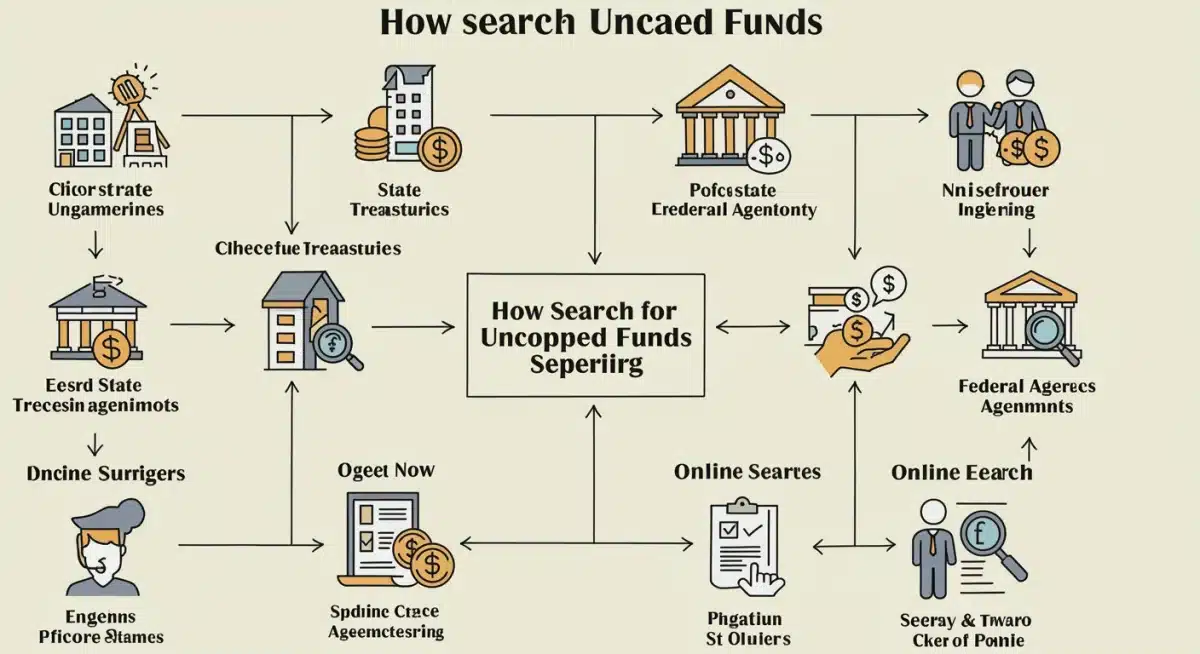
The vast majority of unclaimed property in the United States is held at the state level. Each state maintains its own unclaimed property program, often managed by the state treasurer’s office or a similar department. These programs are designed to protect consumers by safeguarding assets until they can be returned to their rightful owners. It’s often the first and most fruitful place to begin your search.
Searching these databases is typically free and relatively straightforward. Many states have user-friendly websites that allow you to search by name. However, it’s important to be thorough, considering variations in names, previous addresses, and even searching for deceased relatives or former businesses.
How to Conduct a State-Level Search
A systematic approach is key to maximizing your chances of finding unclaimed property. Don’t limit your search to just your current state of residence.
- Current and Previous States of Residence: Search in every state you have ever lived, even for a short period.
- States Where Relatives Resided: If you are searching for a deceased relative’s assets, check the states where they lived.
- National Association of Unclaimed Property Administrators (NAUPA): NAUPA’s website, MissingMoney.com, is an excellent starting point, as it links to most state databases and allows a multi-state search from one portal.
- Different Name Spellings: Try searching with maiden names, previous married names, or common misspellings of your name.
When searching, be prepared to provide personal identification to verify your claim. This usually includes a government-issued ID, proof of address, and sometimes documents proving your connection to the funds, such as a death certificate if claiming for an estate. The process is designed to prevent fraudulent claims, ensuring the money goes to the correct individual. While the initial search is simple, the claiming process itself may require documentation and patience.
Exploring Federal Unclaimed Funds and Benefits
While state programs hold the bulk of unclaimed property, federal agencies also manage billions in forgotten funds. These often come from different avenues, such as uncashed federal tax refunds, veterans’ benefits, and even forgotten savings bonds. The federal government doesn’t have a single, centralized database for all unclaimed funds, meaning you’ll need to check specific agencies relevant to your situation.
Understanding which federal agencies might be holding your money is crucial. For instance, if you’ve ever worked for the federal government, served in the military, or dealt with specific federal programs, these are the areas to investigate. This diversified approach ensures you cover all potential sources of federal funds.
Key Federal Agencies to Check
Several federal departments and agencies are common custodians of unclaimed funds. Knowing where to look can save you significant time and effort.
- IRS (Internal Revenue Service): For uncashed tax refund checks. The IRS website has a tool to check the status of your refund.
- Department of the Treasury: For matured U.S. Savings Bonds that have stopped earning interest.
- Veterans Affairs (VA): For unclaimed payments or benefits for veterans or their beneficiaries.
- Social Security Administration (SSA): For uncashed Social Security payments or benefits.
- Department of Housing and Urban Development (HUD): For FHA mortgage insurance refunds.
Each of these agencies has its own specific procedures and online tools for searching and claiming funds. It’s imperative to visit their official websites directly to avoid scams. Be prepared to provide detailed personal information and documentation to prove your identity and entitlement to the funds. The process can vary significantly between agencies, so patience and thoroughness are your best allies. Recovering federal funds often involves navigating specific bureaucratic channels, but the effort can be well worth it.

The Claiming Process: Documentation and Verification
Once you’ve identified potential unclaimed funds, the next critical step is initiating the claim process. This phase requires meticulous attention to detail, as government agencies demand specific documentation to verify your identity and your right to the money. The goal is to prevent fraud and ensure that funds are returned only to their rightful owners or their legal heirs.
The exact documentation needed will vary depending on the type of fund and the holding agency (state or federal). However, there are common requirements that you should prepare for. Having these documents ready can significantly expedite your claim. It’s better to gather more information than less when dealing with governmental bodies.
Essential Documents for Making a Claim
Providing accurate and complete documentation is paramount to a successful claim. Incomplete submissions are the most common reason for delays or rejections.
- Proof of Identity: A valid government-issued photo ID, such as a driver’s license or passport.
- Proof of Address: Recent utility bills, bank statements, or other official mail showing your current address.
- Proof of Social Security Number: Your Social Security card or official documentation showing your SSN.
- Evidence of Connection to Funds: This might include old bank statements, uncashed checks, insurance policy numbers, or property deeds.
- For Deceased Individuals: A certified death certificate, letters of administration, or a will naming you as the executor or beneficiary.
In addition to these, you may be required to fill out specific claim forms provided by the agency. These forms often ask for detailed information about the funds, your relationship to them, and your personal history. It’s vital to fill out these forms accurately and completely, avoiding any discrepancies. Remember that patience is a virtue in this process. Government agencies process a high volume of claims, and it can take several weeks or even months for a claim to be fully processed and for funds to be disbursed. Follow up periodically, but do so respectfully and patiently.
Avoiding Scams and Protecting Your Information
Unfortunately, the promise of unclaimed money also attracts scammers looking to exploit individuals. It’s crucial to approach the search and claiming process with a healthy dose of skepticism and to protect your personal and financial information diligently. Legitimate government agencies will never ask for payment to release your funds, nor will they typically contact you directly out of the blue demanding personal details via unsolicited emails or phone calls.
Awareness of common scam tactics is your best defense. Scammers often use urgency, intimidation, or tempting offers to get you to reveal sensitive information or send them money. Always remember that recovering your own unclaimed funds is a free service provided by state and federal governments.
Red Flags and Best Practices for Safety
Knowing what to look out for can help you distinguish legitimate efforts from fraudulent ones. Your personal security should always be your top priority.
- Requests for Fees: Legitimate government services for unclaimed property are free. Never pay a fee to search for or claim your money.
- Unsolicited Contact: Be wary of emails, calls, or letters claiming to be from a government agency about unclaimed funds if you haven’t initiated contact.
- Requests for Sensitive Information via Email/Phone: Government agencies will not ask for your full Social Security number, bank account details, or credit card numbers via unsecured email or phone.
- Pressure to Act Immediately: Scammers often create a sense of urgency to bypass rational thought. Take your time to verify any claims.
- Unofficial Websites: Always ensure you are on an official government website (look for .gov domains) when searching or submitting information.
If you encounter anything suspicious, it’s best to verify the information directly with the relevant government agency using official contact information found on their .gov websites, not from the suspicious communication itself. Report any suspected scams to the Federal Trade Commission (FTC) or your state’s attorney general. Protecting your personal information throughout this process is as important as recovering your funds, ensuring that your financial well-being isn’t compromised by illicit activities.
What to Do After You’ve Claimed Your Funds
Successfully claiming your unclaimed government funds is a significant achievement, but the process doesn’t necessarily end with the check in your hand. There are several important steps to consider afterward to ensure financial security and prevent future instances of unclaimed property. This includes updating your records, managing your new assets, and planning for the future. Don’t let this newfound money become another forgotten asset down the line.
Thinking proactively about your finances can transform a one-time recovery into a long-term benefit. This could involve depositing the money wisely, updating beneficiaries, or simply being more diligent in tracking your accounts. The objective is to learn from the past and implement better financial habits moving forward.
Managing Your Recovered Assets and Preventing Future Losses
Taking a few sensible steps post-recovery can make a big difference in maintaining control over your finances.
- Deposit Funds Promptly: Once you receive your check, deposit it into a secure bank account as soon as possible.
- Update Records: Ensure all your financial institutions, employers, and government agencies have your current contact information, including address, phone number, and email.
- Consolidate Accounts: If you have many small, infrequently used accounts, consider consolidating them to simplify management and reduce the chance of dormancy.
- Set Up Direct Deposit: Opt for direct deposit for recurring payments like tax refunds, Social Security benefits, or payroll to avoid uncashed checks.
- Review Accounts Annually: Make it a habit to review all your financial accounts, insurance policies, and investments at least once a year.
Consider consulting with a financial advisor to discuss how best to integrate these recovered funds into your overall financial plan, especially if the amount is substantial. This could involve paying down debt, investing, or saving for a specific goal. The experience of recovering unclaimed funds can be a valuable lesson in financial diligence, encouraging you to maintain better oversight of all your assets and ensuring your money always stays within your reach.
The Lasting Impact of Recovering Overlooked Benefits
The journey of recovering unclaimed government funds extends beyond merely receiving a check; it represents a significant opportunity for individuals to reclaim what is rightfully theirs and to enhance their financial well-being. With over $50 billion remaining unclaimed, the potential for positive impact is enormous, not just for individuals but for the broader economy. This often overlooked resource can provide a much-needed financial boost, alleviate unexpected expenses, or contribute to long-term savings and investments.
Beyond the immediate financial gain, the process itself fosters a greater sense of financial literacy and empowerment. It encourages individuals to be more proactive in managing their assets, understanding their entitlements, and protecting themselves from financial oversight or fraud. This newfound awareness can lead to healthier financial habits that benefit individuals for years to come.
Empowerment Through Financial Reclamation
Recovering overlooked benefits can have a profound and lasting effect on personal finance and peace of mind.
- Financial Security: Provides unexpected capital that can be used for emergencies, debt reduction, or investments.
- Increased Awareness: Educates individuals about the various sources of unclaimed property and the importance of keeping financial records updated.
- Fraud Prevention: The process of diligent searching and claiming reinforces best practices for protecting personal information and avoiding scams.
- Estate Planning: For those claiming on behalf of deceased relatives, it can bring closure and rightful inheritance to beneficiaries.
- Community Benefit: When funds are claimed, they re-enter the economy, potentially stimulating local businesses and services.
Ultimately, the recovery of unclaimed government funds is more than a bureaucratic transaction; it’s a testament to the system designed to protect citizens’ assets and a personal victory for those who successfully navigate it. By following the steps outlined in this guide, you not only stand a chance to recover your own overlooked benefits but also contribute to a more financially aware and secure community. The billions waiting to be claimed are not just numbers; they represent potential and opportunity for countless Americans.
| Key Aspect | Brief Description |
|---|---|
| Search Methods | Utilize state unclaimed property websites (NAUPA) and specific federal agency portals for comprehensive searches. |
| Required Documentation | Prepare proof of identity, address, SSN, and connection to funds; death certificates for estates. |
| Scam Prevention | Never pay fees or provide sensitive data to unsolicited contacts; always use official .gov websites. |
| Post-Claim Actions | Update records, consolidate accounts, and review finances annually to prevent future unclaimed funds. |
Frequently Asked Questions About Unclaimed Funds
Unclaimed government funds are financial assets, such as dormant bank accounts, uncashed checks, utility deposits, or insurance policy proceeds, that have been turned over to state or federal government agencies after a period of inactivity. These funds are held until the rightful owner or their heirs come forward to claim them.
Begin by checking state unclaimed property websites, often linked through MissingMoney.com by NAUPA, for all states where you’ve lived. For federal funds, visit specific agency websites like the IRS for tax refunds or the U.S. Treasury for savings bonds.
No, there is no fee to search for or claim your unclaimed funds from legitimate government agencies. Any service or individual requesting payment for this process is likely a scam. Always use official government websites (.gov) to ensure you are interacting with authentic sources.
Typically, you will need proof of identity (driver’s license, passport), proof of address, your Social Security number, and documentation linking you to the funds (e.g., old bank statements, uncashed checks). For deceased individuals, a death certificate and proof of heirship are required.
The processing time can vary significantly, often ranging from several weeks to a few months, depending on the agency, the complexity of your claim, and the volume of requests. Patience is key, and you can usually check the status of your claim through the respective agency’s website.
Conclusion
The existence of over $50 billion in unclaimed government funds in the United States represents a substantial, often overlooked, financial opportunity for millions of Americans. While the journey to recover these assets requires diligence and careful navigation of various state and federal databases, the potential rewards are significant. By understanding the sources of these funds, meticulously searching official channels, preparing necessary documentation, and remaining vigilant against scams, individuals can successfully reclaim money that is rightfully theirs. This process not only provides a financial boost but also fosters greater financial awareness, encouraging better management of personal assets for the future. Don’t let your share of these billions go unclaimed; take the proactive steps today to bring your forgotten money home.