Environmental Policy 2026: Federal Climate Initiatives & Practical Solutions
Anúncios
The year 2026 is poised to be a landmark period for environmental policy, with significant federal climate initiatives expected to take center stage. As the global community grapples with the escalating impacts of climate change, governments worldwide are intensifying their efforts to implement more robust and far-reaching regulations. In the United States, these upcoming changes reflect a growing consensus on the urgency of climate action, aiming to steer the nation towards a more sustainable and resilient future. Understanding these shifts is not just crucial for policymakers and environmental activists, but for every citizen and business looking to navigate the evolving landscape of environmental responsibility.
Anúncios
This comprehensive guide delves into the anticipated environmental policy changes in 2026, focusing specifically on federal climate initiatives. We will explore the driving forces behind these policy shifts, the key areas of focus, and the potential implications for various sectors. More importantly, we will highlight practical solutions that individuals, communities, and businesses can adopt to not only comply with new regulations but also contribute meaningfully to climate mitigation and adaptation efforts. The goal is to provide a clear roadmap for understanding, preparing for, and actively participating in the transition towards a greener economy.
The Urgency Behind Environmental Policy Changes in 2026
The scientific consensus on climate change is unequivocal: human activities are causing unprecedented alterations to Earth’s climate system, leading to more frequent and intense extreme weather events, rising sea levels, and significant biodiversity loss. The Intergovernmental Panel on Climate Change (IPCC) reports consistently underscore the need for drastic and immediate action to limit global warming to 1.5°C above pre-industrial levels. This scientific imperative forms the bedrock of the push for more aggressive environmental policy changes.
Anúncios
Beyond scientific warnings, economic realities are also driving the shift. The costs associated with climate-related disasters are soaring, impacting national economies, infrastructure, and human lives. Investing in climate resilience and decarbonization now is increasingly seen as a more economically prudent path than bearing the escalating costs of inaction. Furthermore, there’s a growing recognition of the co-benefits of climate action, such as improved public health from reduced air pollution, job creation in green industries, and enhanced energy security.
Political will, though often fluctuating, is also building momentum. International agreements like the Paris Agreement set ambitious goals, and nations are increasingly pressured to demonstrate progress towards their commitments. For the United States, 2026 represents a critical juncture to solidify its leadership in global climate efforts through robust federal climate initiatives. These initiatives are not just about meeting international obligations but about fostering domestic innovation and ensuring long-term national prosperity and security.
Key Pillars of Anticipated Federal Climate Initiatives in 2026
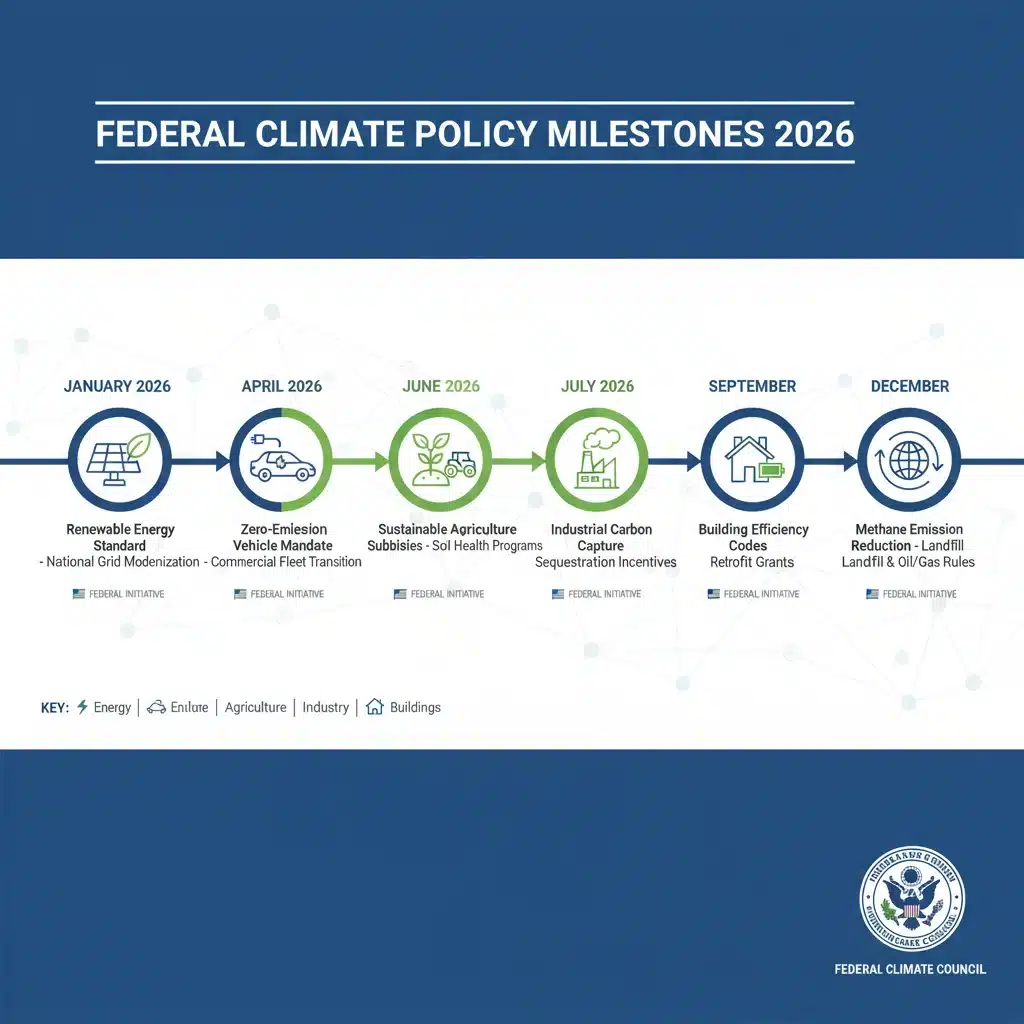
While specific legislative details are always subject to political processes, several overarching themes are expected to define federal climate initiatives in 2026. These pillars represent areas where significant policy development and implementation are anticipated.
1. Decarbonizing the Energy Sector
The energy sector remains the largest contributor to greenhouse gas emissions. Federal climate initiatives in 2026 are likely to double down on accelerating the transition to clean, renewable energy sources. This could involve:
- Enhanced Tax Credits and Incentives: Expanding existing tax credits for solar, wind, geothermal, and other renewable energy technologies, both for utility-scale projects and residential installations.
- Grid Modernization: Significant investment in upgrading and expanding the national electricity grid to accommodate a higher proportion of intermittent renewable energy sources, including smart grid technologies and energy storage solutions.
- Fossil Fuel Emission Standards: Stricter regulations on emissions from power plants that still rely on fossil fuels, potentially including carbon capture and storage mandates or performance standards.
- Offshore Wind Development: Continued expansion of offshore wind leasing and development, streamlining permitting processes, and investing in port infrastructure.
2. Transforming the Transportation Sector
Transportation is another major emissions source, and federal climate initiatives will likely target a rapid shift towards electrification and sustainable mobility:
- Electric Vehicle (EV) Adoption: Further incentives for purchasing EVs, expanding charging infrastructure nationwide, and potentially setting new emissions standards for vehicle manufacturers that accelerate the phase-out of internal combustion engines.
- Public Transit Investment: Significant federal funding for expanding and modernizing public transportation systems, promoting ridership, and investing in electric buses and trains.
- Sustainable Aviation and Shipping: Research and development funding for sustainable aviation fuels (SAFs) and alternative propulsion systems for shipping, alongside potential mandates or incentives for their adoption.
3. Promoting Sustainable Land Use and Agriculture
Land use and agriculture play a dual role in climate change, both as emission sources and potential carbon sinks. 2026 federal climate initiatives may include:
- Conservation Programs: Strengthening programs that incentivize farmers and landowners to adopt practices that sequester carbon in soil, improve soil health, and reduce agricultural emissions (e.g., no-till farming, cover cropping).
- Forest Management: Increased funding for forest restoration, reforestation, and sustainable forest management practices to enhance carbon sequestration and reduce wildfire risks.
- Methane Reduction: Regulations and incentives to reduce methane emissions from livestock and waste management facilities.
4. Advancing Industrial Decarbonization
Heavy industries are challenging to decarbonize, but federal climate initiatives will likely target this sector with:
- Green Industrial Policy: Incentives for industries to adopt low-carbon manufacturing processes, invest in energy efficiency, and switch to cleaner fuels like green hydrogen.
- Carbon Capture and Storage (CCS): Continued support for the development and deployment of CCS technologies, particularly in hard-to-abate sectors.
- Circular Economy Principles: Policies promoting waste reduction, reuse, and recycling to minimize the embodied carbon in manufactured goods.
5. Building Climate Resilience and Adaptation
Beyond mitigation, federal climate initiatives will increasingly focus on helping communities adapt to the unavoidable impacts of climate change:
- Infrastructure Resilience: Funding for climate-resilient infrastructure projects, including upgrading stormwater systems, protecting coastal areas, and hardening the energy grid against extreme weather.
- Early Warning Systems: Investment in advanced climate modeling, forecasting, and early warning systems for extreme weather events.
- Ecosystem-Based Adaptation: Promoting natural solutions like wetland restoration and reforestation to protect communities from climate impacts.
Practical Solutions for Businesses in Response to 2026 Federal Climate Initiatives
Businesses across all sectors will be impacted by the upcoming environmental policy changes. Proactive engagement and adaptation are key to turning potential challenges into opportunities. Here are practical solutions businesses can implement:
1. Conduct a Carbon Footprint Assessment
Before making changes, understand your current impact. A comprehensive carbon footprint assessment will identify major sources of emissions within your operations, supply chain, and product lifecycle. This data is crucial for setting reduction targets and developing effective strategies aligned with federal climate initiatives.
2. Invest in Energy Efficiency and Renewable Energy
This is often the most cost-effective first step. Businesses can:
- Upgrade Equipment: Replace old, inefficient machinery, lighting (e.g., switch to LED), and HVAC systems.
- Optimize Operations: Implement smart building management systems, optimize production schedules, and reduce energy waste.
- On-site Renewables: Install solar panels on rooftops or consider power purchase agreements (PPAs) for off-site renewable energy.
- Energy Audits: Regularly conduct energy audits to identify new opportunities for savings.
3. Decarbonize Your Supply Chain
Many businesses’ largest emissions come from their supply chain. Engage with suppliers to:
- Set Emissions Targets: Encourage suppliers to measure and reduce their own emissions.
- Source Sustainably: Prioritize suppliers who use renewable energy, sustainable materials, and efficient logistics.
- Optimize Logistics: Consolidate shipments, use more efficient transportation modes (e.g., rail over road), and optimize delivery routes.
4. Embrace Circular Economy Principles
Reduce waste and resource consumption by:
- Designing for Durability and Recyclability: Create products that last longer and can be easily repaired, reused, or recycled.
- Implementing Take-Back Programs: Offer customers options to return end-of-life products for proper recycling or refurbishment.
- Reducing Packaging: Opt for minimal, recyclable, or compostable packaging materials.
5. Adapt to Climate Risks
Beyond reducing emissions, businesses need to assess and mitigate their own climate risks:
- Risk Assessment: Identify physical risks (e.g., extreme weather events affecting facilities, supply chains) and transition risks (e.g., new regulations, market shifts).
- Business Continuity Planning: Develop robust plans to ensure operations can continue during climate-related disruptions.
- Invest in Resilience: Implement measures like green infrastructure, flood barriers, or backup power systems.
6. Engage in Policy and Innovation
Stay informed about evolving federal climate initiatives and participate in relevant industry discussions. Invest in research and development for green technologies and sustainable business models. Collaborating with industry peers, academic institutions, and government bodies can foster innovation and collective action.
Practical Solutions for Individuals and Communities
While federal climate initiatives set the framework, individual and community actions are vital for achieving climate goals. Every choice contributes to the larger picture.
1. Reduce Energy Consumption at Home
- Energy-Efficient Appliances: When replacing appliances, choose ENERGY STAR certified models.
- Insulation and Weatherstripping: Improve home insulation and seal drafts to reduce heating and cooling needs.
- Smart Thermostats: Install programmable or smart thermostats to optimize energy use.
- Switch to Renewables: If possible, switch to a green energy provider or install rooftop solar panels.
2. Adopt Sustainable Transportation Habits
- Walk, Bike, or Use Public Transit: For shorter distances, opt for active transportation or public transit.
- Electric Vehicles: Consider purchasing an EV or hybrid vehicle for your next car.
- Car-sharing and Ride-sharing: Utilize these services to reduce the number of cars on the road.
- Reduce Air Travel: When possible, opt for virtual meetings or choose more sustainable travel options.
3. Make Sustainable Food Choices
- Reduce Meat Consumption: Shifting towards a more plant-rich diet can significantly lower your carbon footprint.
- Buy Local and Seasonal: Support local farmers and reduce emissions associated with long-distance transportation.
- Minimize Food Waste: Plan meals, store food properly, and compost food scraps.
4. Practice Responsible Consumption
- Reduce, Reuse, Recycle: Follow the waste hierarchy. Prioritize reducing consumption and reusing items before recycling.
- Buy Durable Goods: Invest in high-quality, long-lasting products.
- Support Sustainable Brands: Choose companies committed to ethical labor practices and environmental sustainability.
5. Engage in Community Climate Action
- Advocate for Change: Contact your elected officials to express support for strong federal climate initiatives and local climate policies.
- Join Local Initiatives: Participate in community gardens, tree-planting events, or local environmental groups.
- Educate Others: Share information about climate change and sustainable practices with friends and family.
The Role of Technology and Innovation in Meeting 2026 Goals
Achieving the ambitious goals set by upcoming federal climate initiatives will heavily rely on technological advancements and innovation. Breakthroughs in several key areas are critical:
1. Renewable Energy Storage
As the grid integrates more intermittent renewables, advanced battery storage (e.g., lithium-ion, solid-state, flow batteries) and other storage solutions (e.g., pumped hydro, compressed air) will be crucial for grid stability and reliability.
2. Carbon Capture, Utilization, and Storage (CCUS)
For hard-to-abate industrial emissions and potentially for direct air capture, CCUS technologies will play a role, requiring further innovation to reduce costs and increase efficiency.
3. Green Hydrogen
Producing hydrogen using renewable electricity (green hydrogen) offers a promising pathway for decarbonizing heavy industry, long-haul transportation, and even some power generation, requiring significant advancements in electrolyzer technology and infrastructure.
4. Sustainable Materials and Manufacturing
Innovation in materials science to create lower-carbon alternatives (e.g., green cement, bio-based plastics) and in manufacturing processes to reduce energy and resource intensity will be vital.
5. Digital Technologies
Artificial intelligence, machine learning, and IoT can optimize energy grids, improve energy efficiency in buildings, enhance precision agriculture, and facilitate smart urban planning, all contributing to meeting climate goals.
Challenges and Opportunities Ahead
Implementing widespread environmental policy changes and federal climate initiatives is not without its challenges. Political will can be fragile, economic transitions can be disruptive, and technological scaling requires significant investment. There will be debates over costs, equity, and the pace of change.
However, these challenges are dwarfed by the immense opportunities. The transition to a green economy is a massive economic driver, creating new industries, jobs, and investment opportunities. It fosters innovation, improves public health, enhances national security, and ultimately safeguards the planet for future generations. For businesses, early adaptation can lead to competitive advantages, increased resilience, and a stronger brand reputation. For individuals, engaging in sustainable practices not only contributes to a healthier planet but can also lead to cost savings and improved well-being.
Conclusion: A Collective Journey Towards a Sustainable 2026 and Beyond
The environmental policy changes anticipated in 2026, driven by robust federal climate initiatives, mark a critical step in the global effort to combat climate change. These policies are designed to accelerate the decarbonization of key sectors, promote sustainable practices, and build resilience against climate impacts. Understanding these shifts is the first step; actively participating in the transition is the next.
Whether you are a business leader strategizing for future compliance, an innovator developing green technologies, or an individual making daily choices, your role is indispensable. The practical solutions outlined above demonstrate that there are actionable steps for everyone to take. By embracing these changes, fostering innovation, and demanding accountability, we can collectively navigate the challenges and seize the opportunities presented by these pivotal federal climate initiatives. The future of our planet depends on our collective action, starting now and extending well beyond 2026.
Author