AI in Education 2026: Transforming Learning & Student Preparation
Anúncios
The dawn of 2026 brings with it a fascinating and somewhat daunting prospect: the full immersion of Artificial Intelligence (AI) into the very fabric of our educational systems. The question is no longer if AI will impact education, but how profoundly it will reshape the learning landscape and what steps we must take to prepare students for this transformed world. This article delves deep into the multifaceted impact of AI, exploring its potential, challenges, and the essential strategies for navigating this exciting future. The AI education transformation is not just a technological shift; it’s a pedagogical revolution.
Anúncios
For decades, science fiction has painted vivid pictures of intelligent machines assisting and even leading educational processes. Today, those visions are rapidly transitioning from speculative fiction to tangible reality. By 2026, AI will be an indispensable tool, influencing everything from curriculum design and instructional delivery to assessment and student support. Understanding this AI education transformation is crucial for educators, policymakers, parents, and, most importantly, students.
The Core Pillars of AI in Education by 2026
The integration of AI into education is not a monolithic event but a convergence of several key technological advancements and pedagogical shifts. By 2026, we can expect AI to fundamentally alter these core pillars:
Anúncios
Personalized Learning Pathways
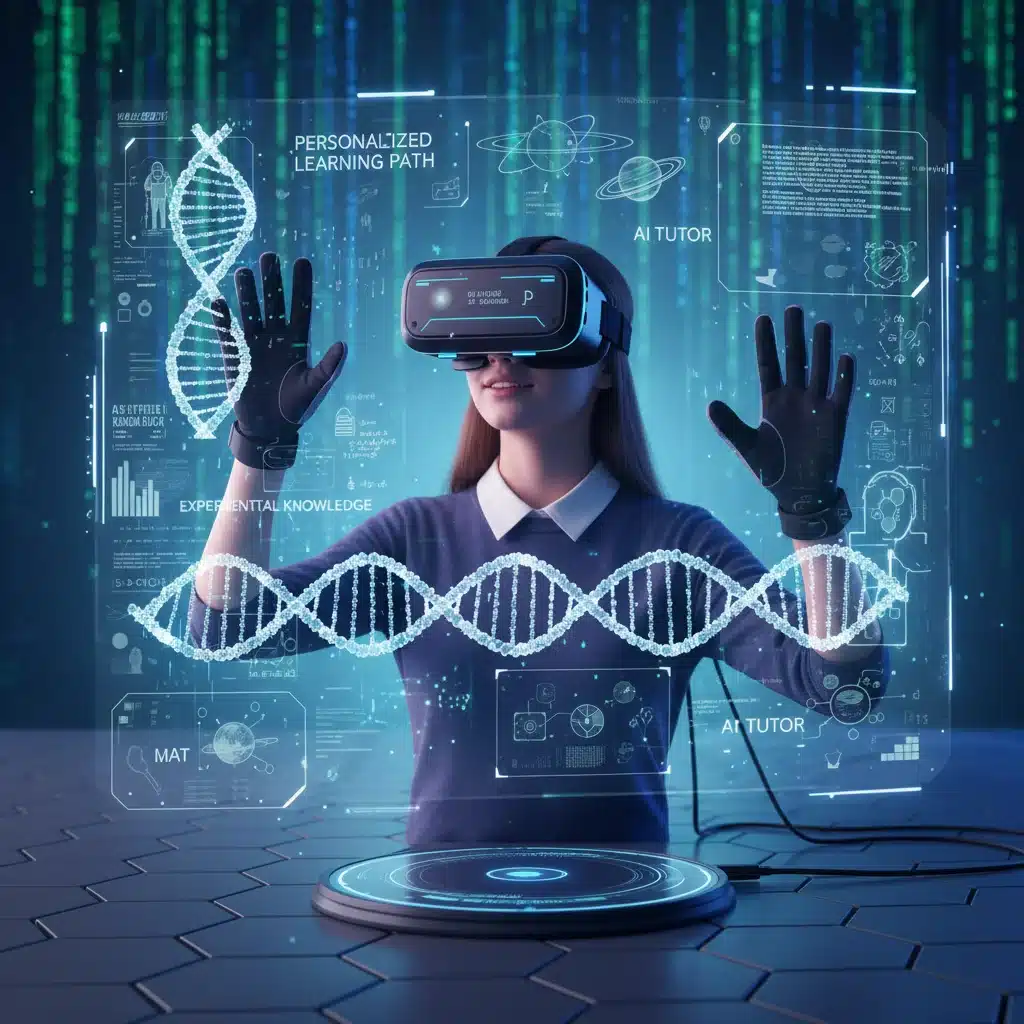
One of the most significant promises of AI in education is its ability to deliver truly personalized learning experiences. Traditional classrooms, by their very nature, struggle to cater to the unique pace, style, and interests of each student. AI-powered platforms, however, can analyze individual student data – including performance, engagement levels, and learning preferences – to create adaptive learning pathways. This means:
- Tailored Content: AI can recommend specific readings, videos, or interactive exercises based on a student’s current understanding and areas needing improvement.
- Adaptive Pacing: Students can progress through material at their own speed, spending more time on difficult concepts and accelerating through mastered ones.
- Personalized Feedback: AI tutors can provide immediate, constructive feedback, identifying misconceptions and guiding students toward correct understanding without human intervention.
- Interest-Based Learning: AI can identify a student’s interests and integrate them into learning modules, making education more engaging and relevant.
This level of personalization is a game-changer, moving us away from a ‘one-size-fits-all’ model to an educational experience that truly respects individual differences. The AI education transformation here is about optimizing each student’s potential.
Automated Administrative and Repetitive Tasks
Teachers often spend a considerable amount of time on administrative and repetitive tasks – grading multiple-choice quizzes, managing schedules, responding to routine inquiries, and organizing resources. AI can shoulder much of this burden, freeing up educators to focus on what they do best: teaching, mentoring, and fostering critical thinking.
- Automated Grading: AI can efficiently grade objective assessments, providing instant results and analysis. Advanced AI can even assist in grading open-ended questions by analyzing keywords and concepts.
- Intelligent Tutoring Systems: Beyond personalized content, AI can act as a virtual teaching assistant, answering student questions, providing explanations, and even identifying students who might be struggling and flagging them for human intervention.
- Content Curation and Creation: AI can scour vast databases to find relevant educational resources, summarize complex topics, and even generate initial drafts of lesson plans or study guides, drastically reducing preparation time for teachers.
- Data Analysis for Insights: AI can analyze student performance data across an entire class or institution, identifying trends, predicting potential learning difficulties, and informing pedagogical adjustments.
By automating these tasks, AI empowers educators to dedicate more time to complex problem-solving, creative teaching methods, and building stronger relationships with their students, thereby enhancing the overall AI education transformation.
Enhanced Accessibility and Inclusivity
AI holds immense potential to break down barriers to education, making learning more accessible and inclusive for diverse student populations. This includes:
- Real-time Translation: AI-powered tools can provide real-time translation of lectures and materials, making education accessible to non-native speakers.
- Adaptive Interfaces: AI can customize learning interfaces for students with disabilities, offering features like text-to-speech, speech-to-text, enlarged fonts, or simplified layouts.
- Personalized Support for Special Needs: AI can identify specific learning challenges and recommend tailored interventions or resources, supporting students with learning disabilities in a more precise and effective manner.
- Global Reach: AI-driven online platforms can deliver high-quality education to remote or underserved communities, democratizing access to knowledge previously out of reach.
The ability of AI to adapt and respond to individual needs means that education can become a more equitable experience for everyone, a crucial aspect of the ongoing AI education transformation.
Preparing Students for an AI-Transformed World: New Skill Sets
As AI reshapes industries and job markets, the skills required for success are also evolving. Education in 2026 must proactively prepare students not just to use AI, but to thrive alongside it. This necessitates a shift in focus from rote memorization to higher-order thinking and uniquely human capabilities.
Critical Thinking and Problem-Solving
While AI excels at processing information and identifying patterns, human critical thinking remains paramount. Students need to be able to:
- Evaluate AI Outputs: Understand how AI works, its limitations, and critically assess the information and solutions it provides.
- Formulate Complex Questions: AI can answer questions, but humans must learn to ask the right, insightful questions to leverage AI effectively.
- Solve Unstructured Problems: AI is good at structured problems; humans need to tackle ambiguous, novel problems that require creativity and nuanced understanding.
Creativity and Innovation
AI can generate creative content, but true innovation often stems from human intuition, imagination, and the ability to connect disparate ideas in novel ways. Education must foster:
- Divergent Thinking: Encouraging students to explore multiple solutions and perspectives.
- Artistic Expression: Nurturing skills in arts, design, and storytelling, areas where human creativity adds unique value.
- Entrepreneurial Mindset: Equipping students to identify opportunities and develop innovative solutions using AI as a tool.
Collaboration and Communication
Working effectively with others, both human and machine, will be a cornerstone of future workplaces. Students need to develop:
- Teamwork Skills: Collaborating on projects, understanding different roles, and achieving common goals.
- Human-AI Collaboration: Learning how to effectively delegate tasks to AI, interpret its outputs, and integrate its capabilities into collaborative workflows.
- Ethical Communication: Discussing complex ideas, negotiating, and articulating arguments clearly, especially concerning AI’s implications.
Digital Literacy and AI Fluency
Beyond basic computer skills, students will need a sophisticated understanding of AI:
- Data Literacy: Understanding how data is collected, analyzed, and used by AI, including privacy and ethical implications.
- Algorithmic Thinking: Grasping the basic principles behind AI algorithms, even without becoming programmers.
- Ethical AI Use: Developing a strong ethical framework for interacting with and deploying AI technologies, recognizing biases and potential harms.
Challenges and Ethical Considerations in the AI Education Transformation
While the potential benefits are immense, the AI education transformation is not without its challenges and ethical dilemmas that must be addressed proactively.
Data Privacy and Security
AI systems in education rely heavily on student data. Protecting this sensitive information from breaches and misuse is paramount. Robust security protocols, transparent data policies, and strict adherence to privacy regulations (like GDPR and FERPA) are essential.
Bias in Algorithms
AI algorithms are trained on data, and if that data reflects existing societal biases, the AI can perpetuate or even amplify those biases. This can lead to unfair treatment or skewed learning experiences for certain student groups. Educators and developers must work to identify and mitigate algorithmic bias, ensuring equitable outcomes for all.
The Role of the Human Educator
As AI takes on more tasks, there’s a natural concern about the future role of teachers. Rather than replacing educators, AI should augment their capabilities. Teachers will transition from being primary knowledge dispensers to facilitators, mentors, and guides, focusing on socio-emotional development, complex problem-solving, and fostering uniquely human skills that AI cannot replicate.
Digital Divide and Equity of Access
The benefits of AI in education will only be realized if access to technology and reliable internet is equitable. The digital divide could be exacerbated if certain students lack the necessary infrastructure or devices to engage with AI-powered learning tools. Policy makers and educational institutions must ensure that the AI education transformation is inclusive for all socio-economic backgrounds.
Over-reliance on Technology
While AI offers powerful tools, an over-reliance on technology without critical thinking about its application can be detrimental. Students must learn when and how to use AI effectively, and when to rely on human intellect and traditional methods. The goal is augmentation, not replacement, of human cognitive abilities.
Strategies for Successful AI Integration by 2026
To successfully navigate the AI education transformation by 2026, a multi-pronged approach involving various stakeholders is necessary.
Professional Development for Educators
Teachers are at the forefront of this change and require comprehensive training. This includes:
- AI Literacy: Understanding what AI is, how it works, and its potential applications in the classroom.
- Pedagogical Integration: Learning how to effectively incorporate AI tools into lesson plans and teaching strategies.
- Ethical Guidelines: Training on the responsible and ethical use of AI, including data privacy and bias awareness.
- Role Redefinition: Helping teachers embrace their evolving role as facilitators and mentors in an an AI-enhanced learning environment.
Curriculum Reform
Educational curricula must be updated to reflect the demands of an AI-driven world. This involves:
- Integrating AI Concepts: Introducing basic AI concepts, computational thinking, and data literacy across various subjects.
- Focus on Future-Ready Skills: Emphasizing critical thinking, creativity, collaboration, and complex problem-solving over rote memorization.
- Interdisciplinary Approaches: Encouraging cross-disciplinary learning that mirrors real-world challenges often addressed with AI.
Investment in Infrastructure and Technology
Schools and educational institutions need significant investment in robust digital infrastructure, including:
- High-speed Internet: Ensuring reliable and fast internet access for all students and educators.
- AI-Powered Platforms: Adopting and integrating quality AI learning platforms and tools.
- Hardware: Providing adequate devices (computers, tablets, VR headsets) to facilitate AI-enhanced learning experiences.
Collaboration Between Academia, Industry, and Government
The successful AI education transformation requires concerted efforts from all sectors:
- Industry Partnerships: Tech companies can provide expertise, tools, and training resources.
- Academic Research: Universities can lead research into effective AI pedagogical methods and ethical frameworks.
- Government Policies: Governments need to develop supportive policies, funding initiatives, and regulatory frameworks to guide AI integration responsibly and equitably.

The Future Classroom: A Vision for 2026
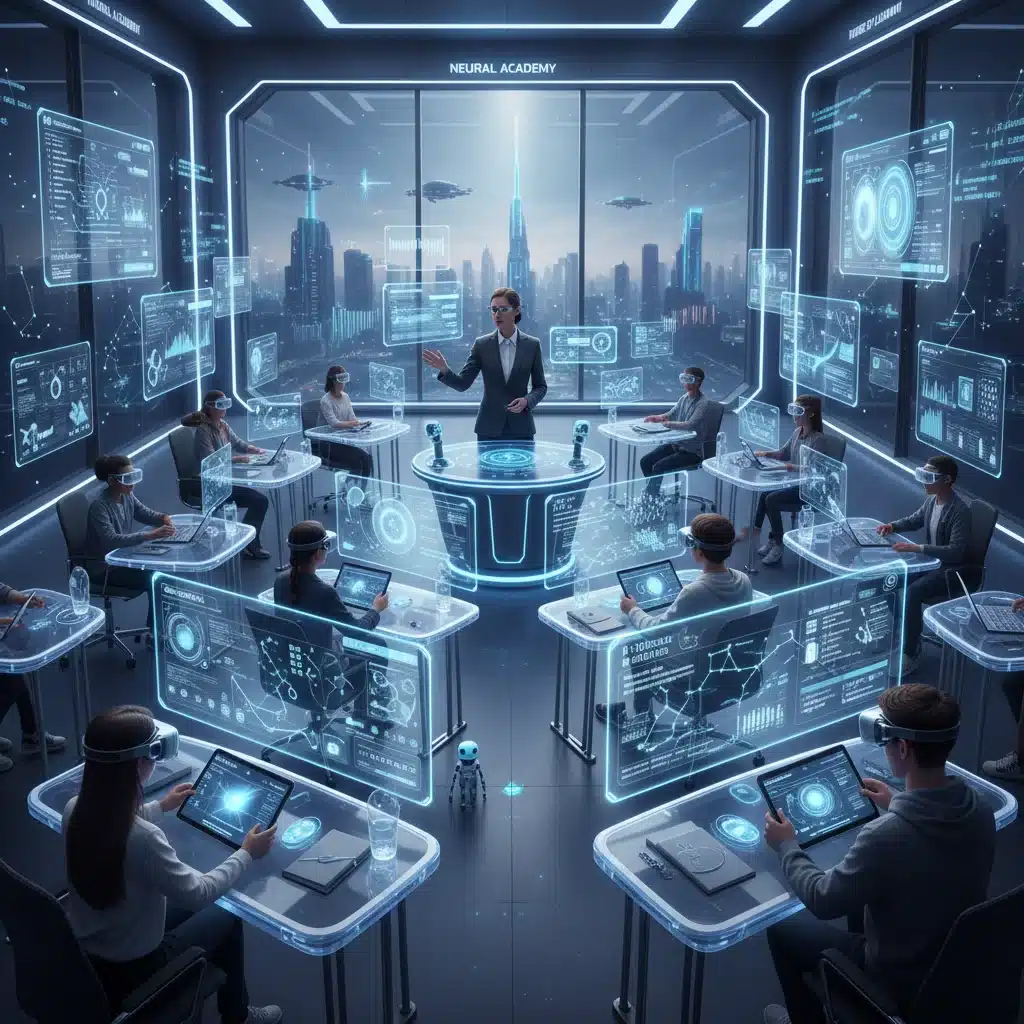
Imagine a classroom in 2026 where the AI education transformation is fully realized. Students enter a dynamic space where their learning journey is uniquely their own. An AI assistant greets them, providing a personalized overview of their progress and suggesting activities for the day based on their learning style and current understanding. Some students might be engaged in immersive VR simulations, exploring ancient civilizations or dissecting virtual organs with haptic feedback, while others collaborate on a project, using AI tools to research, analyze data, and generate initial drafts of their presentations.
The teacher, no longer solely focused on delivering lectures, circulates through the room, engaging in deep conversations with small groups, providing individualized mentorship, and facilitating complex, real-world problem-solving challenges. AI handles the grading of routine assignments, allowing the teacher to provide richer, more qualitative feedback on creative projects and critical essays. Students with learning differences receive seamless, integrated support, with AI adapting content and presentation methods in real-time to meet their specific needs.
This classroom is not devoid of human connection; in fact, AI enhances it by freeing up teachers to focus on the human elements of education: empathy, mentorship, and fostering a collaborative community. The curriculum is fluid, adapting to global changes and student interests, with AI helping to curate the most relevant and engaging content.
Conclusion: Embracing the AI Education Transformation
The year 2026 is rapidly approaching, and with it, a profound AI education transformation. This shift presents both incredible opportunities and significant challenges. By embracing personalized learning, automating administrative tasks, enhancing accessibility, and focusing on future-ready skills, AI can revolutionize how we teach and how students learn. However, this transformation must be guided by careful consideration of ethical implications, data privacy, and the crucial role of human educators.
Preparing students for an AI-transformed world means equipping them with critical thinking, creativity, collaboration, and a deep understanding of AI’s capabilities and limitations. It requires continuous professional development for teachers, thoughtful curriculum reform, robust technological infrastructure, and a collaborative effort across all sectors of society. The future of education is not just about integrating AI; it’s about intelligently leveraging AI to empower every student to reach their full potential and thrive in a world that is constantly being reshaped by technological innovation. The journey of the AI education transformation is an exciting one, promising a more equitable, engaging, and effective learning experience for generations to come.
Author