Cut College Costs 2026: Smart Strategies for a 15% Reduction

Anúncios
Cut College Costs 2026: Smart Strategies for a 15% Reduction
The dream of higher education often comes with a hefty price tag. As we look towards the 2026 academic year, the cost of college continues to be a significant concern for students and families worldwide. Tuition fees, room and board, books, and living expenses can quickly accumulate, leading to substantial debt and financial strain. However, with strategic planning and proactive measures, it is entirely possible to reduce college costs by 15% or even more. This comprehensive guide will equip you with actionable insights and practical strategies to navigate the complex landscape of college financing, ensuring your educational aspirations remain within reach without breaking the bank.
Anúncios
Understanding the various components that contribute to the overall cost of college is the first step towards effective cost reduction. Beyond the sticker price of tuition, families must consider indirect costs such as transportation, personal expenses, and the potential loss of income if a student works less or a parent takes time off. By dissecting these elements, we can identify specific areas where savings can be maximized. Our goal is to empower you with the knowledge to make informed decisions, challenge conventional wisdom, and ultimately achieve a significant reduction in your college expenses for 2026 and beyond.
The Escalating Cost of Higher Education: Why Act Now to Reduce College Costs
Year after year, the cost of attending college continues its upward trajectory. According to recent reports, tuition and fees at private four-year institutions have increased by an average of 2.1% per year over the last decade, while public four-year institutions saw an average increase of 1.3% per year. These figures don’t even account for the rising costs of housing, food, and other essential living expenses. For many families, the prospect of affording a college education feels increasingly out of reach, leading to difficult choices and, often, significant student loan debt.
Anúncios
The implications of this escalating cost are far-reaching. High student loan debt can delay major life milestones such as buying a home, starting a family, or even pursuing certain career paths. It can also create a long-term financial burden that impacts an individual’s economic well-being for decades. This is precisely why it’s crucial to implement strategies to reduce college costs proactively. Waiting until the last minute can severely limit your options and force you into less favorable financial situations. By starting early and adopting a multi-faceted approach, you can gain control over your education budget and secure a more stable financial future.
Furthermore, the value proposition of a college degree is constantly being scrutinized. While a college education often leads to higher earning potential, the return on investment can be diminished if the cost is excessively high. Therefore, finding ways to make college more affordable isn’t just about saving money; it’s about maximizing the value of your educational investment. This guide will help you identify opportunities to achieve that balance, ensuring that your pursuit of knowledge is both enriching and economically sound.
Strategic Planning: The Foundation for Reducing College Costs
Effective cost reduction begins with a well-thought-out plan. Just as you wouldn’t embark on a major journey without a map, you shouldn’t approach college financing without a clear strategy. This involves several key steps, starting with a realistic assessment of your financial situation and educational goals. Understanding your family’s Expected Family Contribution (EFC) and how it impacts financial aid eligibility is paramount. Tools like the FAFSA4caster can provide an early estimate, helping you set realistic expectations.
Early Bird Gets the Worm: Starting Your College Savings and Application Process
One of the most impactful ways to reduce college costs is to start saving early. Even small, consistent contributions to dedicated college savings plans, such as 529 plans, can accumulate significantly over time due to compound interest. These plans offer tax advantages, making them an excellent vehicle for college savings. The earlier you begin, the more time your money has to grow, reducing the amount you’ll need to borrow later.
Beyond savings, an early start to the college application process itself can yield substantial benefits. Many scholarships have early application deadlines, and some institutions offer priority consideration for financial aid to early applicants. Furthermore, applying early allows you ample time to refine your applications, essays, and portfolios, increasing your chances of acceptance and, crucially, securing merit-based aid.
Researching Colleges: Beyond the Sticker Price
When researching colleges, it’s essential to look beyond the advertised tuition. The ‘sticker price’ rarely reflects what most students actually pay. Focus instead on the ‘net price,’ which is the cost of attendance minus any grants and scholarships. Many college websites have net price calculators that can give you a personalized estimate. Prioritize institutions known for their generous financial aid packages and strong return on investment.
Consider colleges where your academic profile places you in the top tier of applicants. These institutions are often more likely to offer significant merit scholarships to attract high-achieving students. Don’t shy away from exploring public universities, especially in-state options, which typically have lower tuition rates than private institutions. However, remember that some private colleges, despite their higher sticker price, may offer more substantial aid, making their net cost comparable or even lower than public options.
Maximizing Financial Aid and Scholarships: Your Biggest Allies to Reduce College Costs
Financial aid and scholarships are, without a doubt, the most powerful tools at your disposal to reduce college costs. Understanding the different types of aid and knowing how to effectively apply for them can make a difference of thousands, if not tens of thousands, of dollars.
The FAFSA and CSS Profile: Gateway to Financial Assistance
The Free Application for Federal Student Aid (FAFSA) is the cornerstone of college financial aid. It determines your eligibility for federal grants, work-study programs, and federal student loans. Completing the FAFSA accurately and on time is critical. It becomes available on October 1st each year, and many states and colleges have their own priority deadlines, so submitting it as early as possible is highly recommended.
Some private colleges and scholarship organizations also require the CSS Profile, which provides a more detailed look at your family’s finances than the FAFSA. While the FAFSA focuses primarily on income and assets, the CSS Profile delves deeper into factors like home equity, small business equity, and non-custodial parent income. Be meticulous in completing both forms, as errors can delay your aid package or reduce your eligibility.
Grants: Free Money You Don’t Have to Repay
Grants are a fantastic way to reduce college costs because, unlike loans, they do not need to be repaid. Federal grants, such as the Pell Grant and Federal Supplemental Educational Opportunity Grant (FSEOG), are typically awarded based on financial need. States and individual colleges also offer their own grant programs. Researching these opportunities and meeting their specific eligibility criteria is crucial.
Many grants are highly competitive, so presenting a strong application is essential. This often involves demonstrating not only financial need but also academic merit, community involvement, or specific talents. Don’t assume you won’t qualify; always apply, as eligibility requirements can vary widely.
Scholarships: Merit, Need, and Niche Opportunities
Scholarships are another form of ‘free money’ that can significantly reduce college costs. They come in countless forms: academic scholarships, athletic scholarships, scholarships for specific majors, community service scholarships, scholarships for minority groups, and even highly niche scholarships for unique hobbies or talents. The key is to be diligent and persistent in your scholarship search.
Start your scholarship search early and use a variety of resources. High school guidance counselors, college financial aid offices, and online scholarship databases (like Fastweb, Scholarship.com, and the College Board’s Scholarship Search) are excellent starting points. Create a detailed profile on these platforms to match with relevant opportunities. Remember to tailor each application to the specific scholarship criteria, highlighting how your achievements and aspirations align with the scholarship’s mission.

Appealing Financial Aid Decisions
If the initial financial aid package you receive isn’t sufficient, don’t be afraid to appeal. Colleges often have some discretion in adjusting aid packages, especially if there have been significant changes in your family’s financial situation (e.g., job loss, medical expenses) or if you’ve received a more generous offer from another institution. Write a polite, well-reasoned appeal letter, providing any necessary documentation to support your request. This proactive step can often lead to a better aid package and further reduce college costs.
Smart Academic Choices to Reduce College Costs
Beyond financial aid, your academic path itself can be a powerful lever for cost reduction. Strategic academic planning can shave off thousands of dollars from your total college bill.
AP, IB, and Dual Enrollment: Earning College Credit in High School
One of the most effective ways to reduce college costs is to earn college credits while still in high school. Advanced Placement (AP) and International Baccalaureate (IB) programs allow students to take college-level courses and exams. Scoring well on these exams can often translate into college credit, allowing you to bypass introductory courses and potentially graduate early or take fewer courses during your college years. This directly reduces tuition costs and can also save on living expenses if you finish sooner.
Dual enrollment programs, where high school students take courses at a local community college, offer another excellent opportunity to earn transferable college credits at a significantly lower cost than university tuition. These credits can then be transferred to your chosen four-year institution, accelerating your degree completion and saving you money.
Community College First: A Cost-Effective Pathway
Starting your higher education journey at a community college for the first two years and then transferring to a four-year university is a well-established strategy to significantly reduce college costs. Community college tuition is typically a fraction of what a four-year institution charges. By completing your general education requirements at a community college, you can save tens of thousands of dollars without compromising the quality of your foundational education.
Many community colleges have articulation agreements with four-year universities, ensuring a smooth transfer of credits. Research these agreements carefully to ensure your community college courses will count towards your desired bachelor’s degree. This approach allows you to earn a prestigious university degree while drastically cutting down on the overall expense.
Graduating on Time (or Early): The Power of Efficiency
Every additional semester or year you spend in college adds to your overall cost, not just in tuition but also in living expenses and lost earning potential. Therefore, graduating on time, or even early, is a direct way to reduce college costs. Plan your course schedule carefully, avoid unnecessary electives, and stay on track with your major requirements.
Utilize academic advising services to ensure you’re taking the right courses and meeting all degree requirements. If possible, consider taking summer courses to catch up or get ahead, especially if they are offered at a lower rate or allow you to graduate a semester early. The financial benefits of timely graduation are substantial.
Smart Budgeting and Lifestyle Choices: Everyday Savings to Reduce College Costs
While financial aid and academic planning address the big-ticket items, everyday budgeting and lifestyle choices play a crucial role in chipping away at your overall college expenses. These smaller savings can accumulate to a significant sum, helping you further reduce college costs by that targeted 15% or more.
Housing: On-Campus vs. Off-Campus vs. Commuting
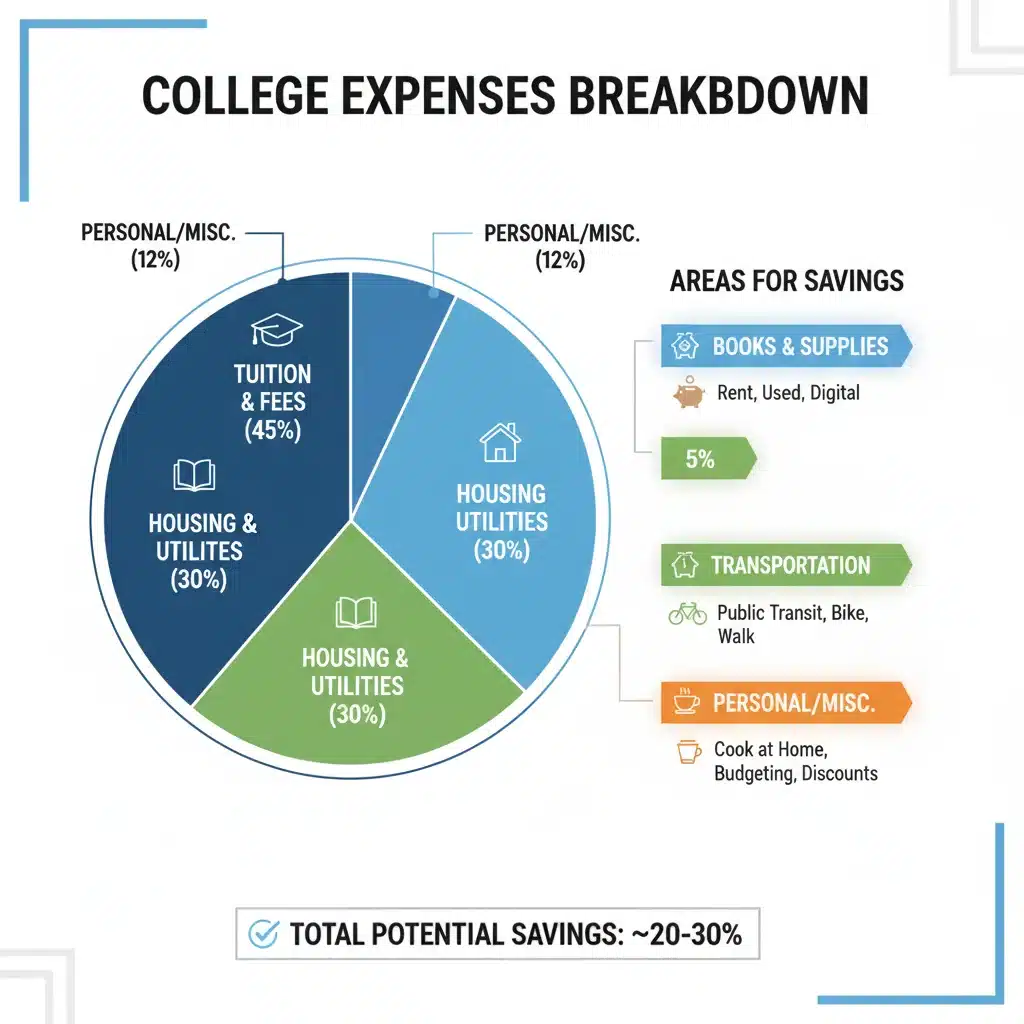
Housing is often the second-largest expense after tuition. While living on campus can offer convenience and a traditional college experience, it’s frequently more expensive than off-campus alternatives. Exploring off-campus housing with roommates can significantly reduce college costs. Renting an apartment or house with several friends can split utility costs, internet, and rent, making it far more affordable.
For students attending a local university, living at home and commuting can be the most cost-effective option, eliminating housing and meal plan expenses entirely. Weigh the pros and cons of each option, considering transportation costs and the impact on your college experience. Sometimes, a slightly longer commute is worth the substantial financial savings.
Food: Smart Eating Habits and Meal Prep
College meal plans can be convenient, but they are often expensive and may not cater to all dietary needs or preferences. If you’re living off-campus, or even if your on-campus meal plan is flexible, learning to cook and meal prep can dramatically reduce college costs related to food. Buying groceries in bulk, cooking at home, and packing your lunch instead of eating out can save hundreds of dollars each month.
Look for student discounts at local grocery stores and learn to plan meals around sales. Avoid expensive coffee shop habits and limit restaurant visits. These small changes in eating habits can lead to substantial long-term savings.
Textbooks and Supplies: Finding Affordable Alternatives
Textbooks are notoriously expensive, but there are many ways to avoid paying full price. Before buying new, always check if you can rent textbooks (from the campus bookstore or online platforms like Chegg), buy used copies, or find digital versions. Many libraries also have required textbooks available for short-term loan. Websites like Library Genesis or OpenStax offer free, open-source textbooks for a growing number of subjects, which can completely eliminate this expense.
For school supplies, take advantage of back-to-school sales, even if you’re not in high school. Look for generic brands and only buy what you truly need. Every dollar saved on supplies is a dollar that doesn’t add to your overall college debt.
Transportation: Public Transit, Biking, and Carpooling
The cost of owning and maintaining a car (gas, insurance, parking, maintenance) can be a significant drain on a student’s budget. If possible, opt for public transportation, biking, or walking to get around campus and the surrounding area. Many universities offer free or discounted transit passes for students. Carpooling with friends for longer trips can also reduce college costs associated with fuel and tolls.
If a car is absolutely necessary, consider a fuel-efficient model and explore options for cheaper insurance. Minimize unnecessary driving and plan errands efficiently to save on gas.
Part-Time Work and Work-Study Programs
Working part-time during college can help cover living expenses and reduce the need for student loans. Federal Work-Study programs allow students to earn money through part-time jobs, often on campus, while pursuing their studies. These jobs are typically flexible and designed to accommodate academic schedules. Look for opportunities that offer relevant experience for your major, turning your work into a valuable resume builder.
Even a few hours a week can make a difference in your budget and help you avoid taking out additional loans, thereby helping to reduce college costs in the long run.
Alternative Education Paths to Reduce College Costs
For some, traditional four-year college isn’t the only, or even the best, path. Exploring alternative education models can provide high-quality learning experiences at a fraction of the cost, significantly helping to reduce college costs.
Online Degrees and MOOCs
Online degree programs have become increasingly popular and reputable. Many universities offer fully accredited online bachelor’s and master’s degrees that are often more affordable than their on-campus counterparts. The flexibility of online learning also allows students to work full-time, further offsetting educational expenses.
Massive Open Online Courses (MOOCs) from platforms like Coursera, edX, and Udacity offer free or low-cost courses from top universities. While not always credit-bearing, they can be excellent for skill development, exploring potential majors, or even earning certifications that can boost your resume without the full cost of a degree program. Some MOOCs now offer ‘micro-credentials’ or pathways to full degrees at a reduced cost.
Vocational and Trade Schools: Focused, Affordable Education
Not every career path requires a four-year degree. Vocational schools and trade programs offer focused, hands-on training for specific professions (e.g., electrician, welder, nurse, IT specialist). These programs are typically much shorter and significantly less expensive than traditional college degrees, allowing graduates to enter the workforce faster and with less debt. For many in-demand fields, a trade school education offers an excellent return on investment and a direct route to a well-paying job, making it a powerful way to reduce college costs.
Employer Tuition Assistance Programs
Many companies offer tuition assistance or reimbursement programs for employees pursuing higher education, especially if the degree is relevant to their job. This can be a fantastic way to reduce college costs, as your employer essentially pays for part or all of your education. Research companies with strong tuition benefits and consider working for one while pursuing your degree part-time. This strategy allows you to gain work experience, earn an income, and get an education, often without incurring significant debt.
Managing Student Loans: Borrow Wisely to Reduce Long-Term Costs
Even with the most diligent efforts to reduce college costs, many students will still need to take out some form of student loan. The key is to borrow wisely and manage your loans effectively to minimize long-term financial burden.
Prioritize Federal Loans Over Private Loans
Always exhaust your federal student loan options before considering private loans. Federal loans come with numerous benefits that private loans typically do not, including fixed interest rates, income-driven repayment plans, forbearance and deferment options, and potential for loan forgiveness in certain professions. Private loans often have variable interest rates, fewer repayment protections, and require a co-signer, making them a riskier and more expensive option.
Borrow Only What You Need
It’s tempting to borrow the maximum amount offered, but resist this urge. Only borrow what is absolutely necessary to cover your educational expenses. Every dollar you borrow must be repaid with interest, so minimizing your loan amount is one of the most effective ways to reduce college costs over the life of the loan. Create a detailed budget and stick to it, ensuring you’re not using loan money for non-essential expenses.
Understand Repayment Options
Before you even take out a loan, understand the various repayment options available. Federal loans offer several income-driven repayment (IDR) plans that can adjust your monthly payments based on your income and family size. While these plans can extend the repayment period, they can also prevent default and make payments more manageable. Knowing your options empowers you to make informed decisions and choose the best path for your financial situation.
Making Interest Payments During School
If you have unsubsidized federal loans or private loans, interest begins to accrue immediately. If your budget allows, making small interest payments while you are still in school can significantly reduce college costs in the long run. By paying down the interest as it accrues, you prevent it from capitalizing (being added to your principal balance), which means you’ll pay interest on a smaller amount after graduation.
Conclusion: Your Path to a More Affordable Education in 2026
The journey to higher education doesn’t have to be synonymous with overwhelming debt. By adopting a proactive, multi-pronged approach, you can strategically reduce college costs by 15% or more for the 2026 academic year. This involves a combination of early planning, diligent scholarship searching, smart academic choices, and disciplined budgeting.
Remember, every dollar saved is a dollar that doesn’t need to be borrowed and repaid with interest. Start by maximizing your financial aid eligibility through the FAFSA and CSS Profile. Aggressively pursue grants and scholarships, leaving no stone unturned in your search. Leverage academic strategies like AP/IB credits and community college transfers to earn credits affordably. Make conscious lifestyle choices regarding housing, food, and transportation.
Finally, explore alternative education paths if they align with your career goals, and if loans are necessary, borrow responsibly. By implementing these strategies, you’re not just saving money; you’re investing in a more secure financial future, allowing you to focus on your studies and career without the crushing burden of excessive student debt. Take control of your education budget today, and pave the way for an affordable and successful college experience in 2026.